Winter leaves more than just traces
As soon as temperatures rise, it quickly becomes apparent outdoors what the winter has left behind. Terraces are covered with green deposits, paths look dull and dirt accumulates in joints that has settled over months. What hardly stands out in everyday life suddenly becomes visible in spring.
Especially for properties, commercial businesses or well-maintained private premises, this is more than just a visual issue. Dirty and slippery surfaces pose a safety risk and leave a poor impression on customers, visitors or tenants.
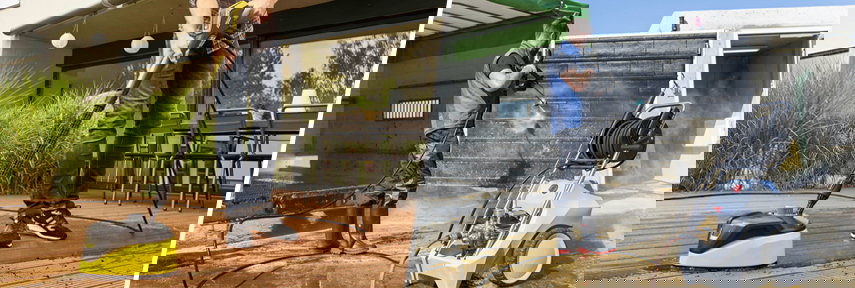
The pressure washer is one of the most effective tools during this phase. When used correctly, it saves time, significantly reduces effort and delivers a clean, uniform result.
Why a pressure washer is the best choice
While terraces used to be scrubbed laboriously by hand, today the water jet does the actual work. Modern pressure washers operate with high pressure and sufficient water volume, allowing even deeply embedded dirt to be loosened and rinsed away directly.
This advantage is particularly noticeable in spring. Algae, moss and fine deposits can be removed quickly without having to treat large areas multiple times. At the same time, the strong flushing performance ensures that loosened dirt is not simply spread but consistently removed.
In practice, this means: less time required, less physical strain and a much more uniform result.
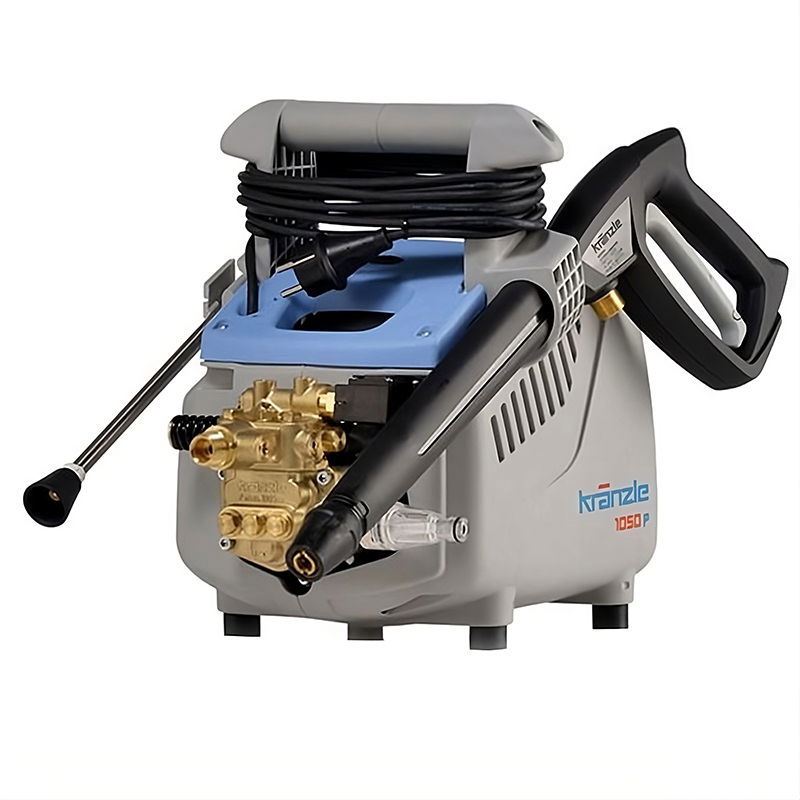
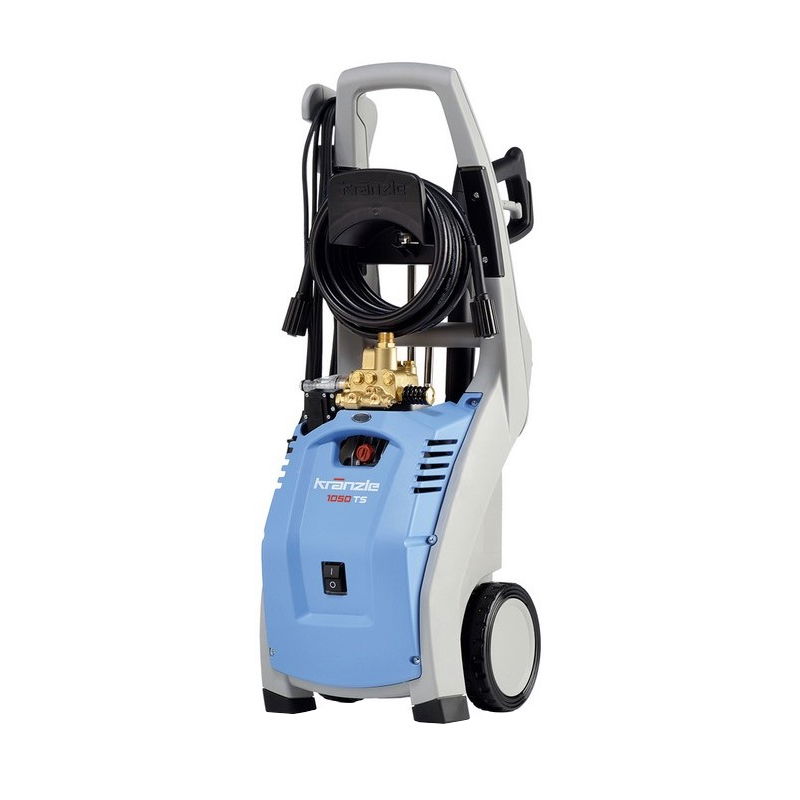
Kärcher is considered a pioneer in this field, while Kränzle is particularly known in the professional segment for durable machines.
The advantages at a glance:
- Significantly faster than manual cleaning
- Effectively removes deeply embedded dirt
- Saves effort and reduces labour requirements
-Ideal for large areas such as terraces or driveways
Typical areas of application around the building
When using a pressure washer in spring, many people first think of terraces. In reality, however, there are many more areas that benefit from it.
Terraces and seating areas
Terrace slabs made of concrete or natural stone are particularly easy to clean because dirt settles in pores and small uneven surfaces. With the right pressure, this dirt is removed without damaging the surface. A consistent movement is important to avoid visible differences.
Paths, driveways and parking areas
Driveways, walkways and parking areas also benefit greatly from thorough cleaning. After winter, not only dirt accumulates there, but also fine residues from traffic and weather. These can be efficiently removed with a pressure washer.
Stairs and entrance areas
Stairs and entrances are often underestimated. Cleaning here is not only about appearance but also about safety. Smooth, dirty steps are a common cause of accidents and should be specifically treated in spring.
The key point: technique over pressure
Many users assume that the highest possible pressure automatically delivers the best result. This is one of the most common mistakes. A pressure washer can operate at over 150 bar, which corresponds to enormous force. If used incorrectly, this pressure can damage surfaces, wash out joints or roughen materials.
In practice, the maximum pressure is less important than the right combination of distance, movement and nozzle. Those who work evenly and control the jet achieve far better results than those who work selectively with full power.
A proven approach is to work in consistent lanes. This ensures that dirt is removed systematically rather than spread uncontrollably.
Assessing materials correctly: the key to good results
Not every surface reacts the same way to water pressure. This point is often underestimated and ultimately determines whether the cleaning is sustainable.
Hard materials such as granite or densely fired stone are relatively resistant and can be cleaned with higher pressure. Softer materials behave differently. Concrete, for example, can be washed out by excessive pressure, making the surface rougher and more prone to future dirt.
Wood is particularly sensitive. Too strong a water jet can tear up the fibres, which not only looks unattractive but also shortens its lifespan.
Therefore, in practice: work in a controlled, material-appropriate way rather than using maximum power.
Kärcher or Kränzle: two brands, two approaches
Two brands have established themselves in the pressure washer market and are widely used in professional environments.
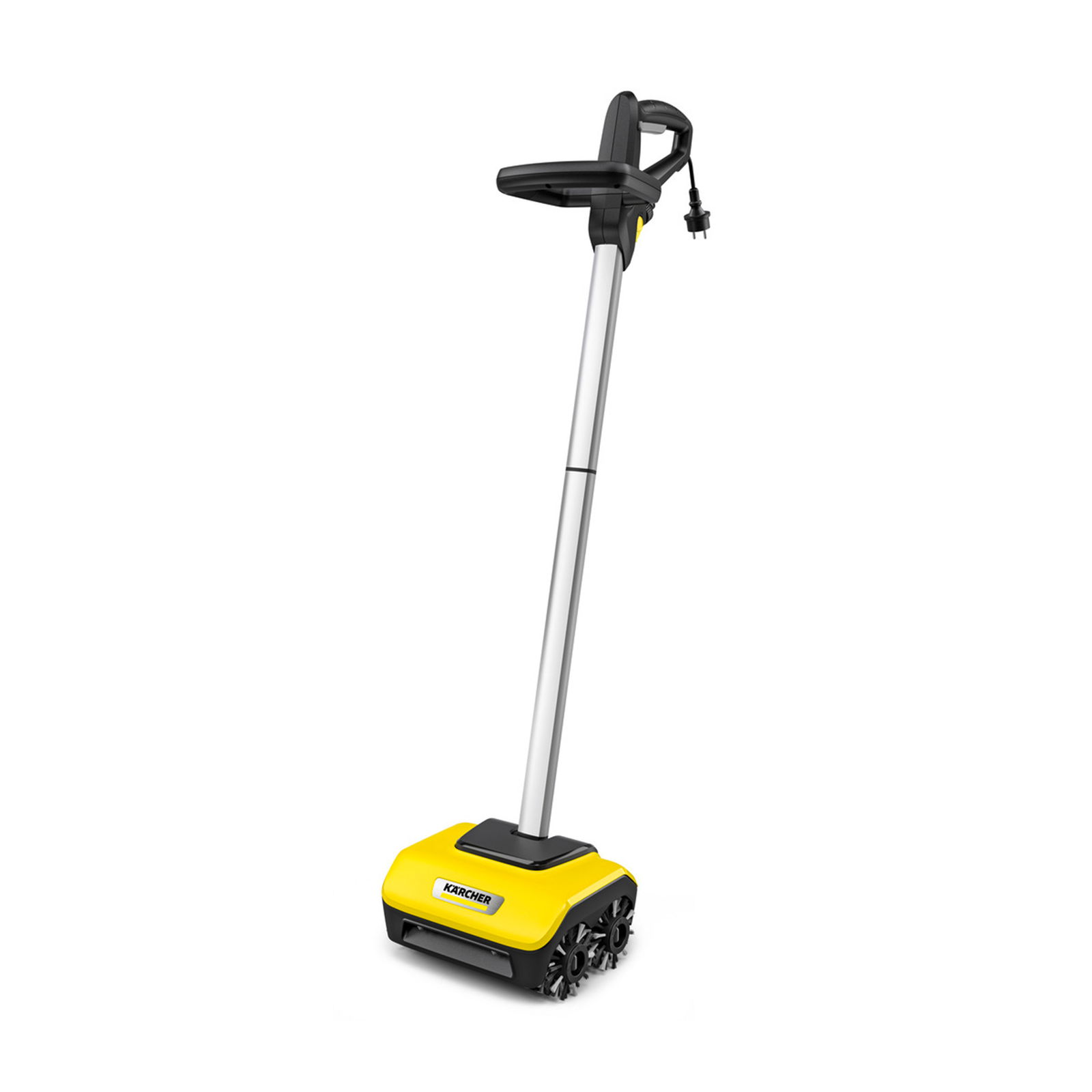
Kärcher stands for a wide product range and high user-friendliness. The machines are versatile and offer a large selection of accessories, especially for outdoor surface cleaning. This makes them ideal for property maintenance, small businesses or demanding private users.
Kränzle, on the other hand, is firmly positioned in the professional segment. The machines are designed for durability, robust construction and consistent performance. This is particularly advantageous for regular use or large areas.
Both brands are justified. The decisive factor is less the brand itself and more how frequently and extensively the machine is used.
Typical mistakes in practice
Many problems arise not from the machine itself but from its use. A common mistake is working too selectively, which creates visible differences on the surface that are difficult to correct later.
Another classic mistake is working too close to the surface. The pressure is strongest directly behind the nozzle, which can quickly cause damage.
Patience also plays a role. Trying to remove stubborn dirt immediately often leads to unnecessary pressure. It is often better to let dirt soak briefly and then clean in a controlled manner.
Step by step: how to clean properly
Thorough cleaning begins not with the pressure washer but with preparation. First remove loose dirt such as leaves, soil or sand and clear the area. This simple step prevents coarse dirt from being dragged across the surface and leaving new marks.
Once the area is prepared, it is advisable to consciously adjust the pressure washer instead of starting at full power. Begin with low pressure and gradually increase to the optimal setting.
During cleaning, a calm and even working method is essential. Guide the water jet in controlled lanes and maintain a consistent distance. This ensures systematic dirt removal and prevents uneven patches.
For greater efficiency, suitable accessories such as a surface cleaner are recommended. These distribute pressure evenly and simplify the process, while also reducing splashing and surface damage.
Finally, check details such as joints or stubborn spots. Often, targeted reworking is sufficient rather than cleaning the entire surface again.
Special case: cleaning solar panels and blinds properly
While terraces and paths are immediately noticeable in spring, two areas are often overlooked: solar systems and venetian blinds. Both are exposed to weather year-round and are sensitive to dirt. Here, a pressure washer alone is not sufficient. Special attachments and well-designed systems are required.
Solar panels: cleanliness directly affects performance
Many underestimate how much dirt impacts photovoltaic performance. Dust, pollen, bird droppings, or agricultural residues can significantly reduce light absorption. This leads to lower energy output and uneven load on modules over time.
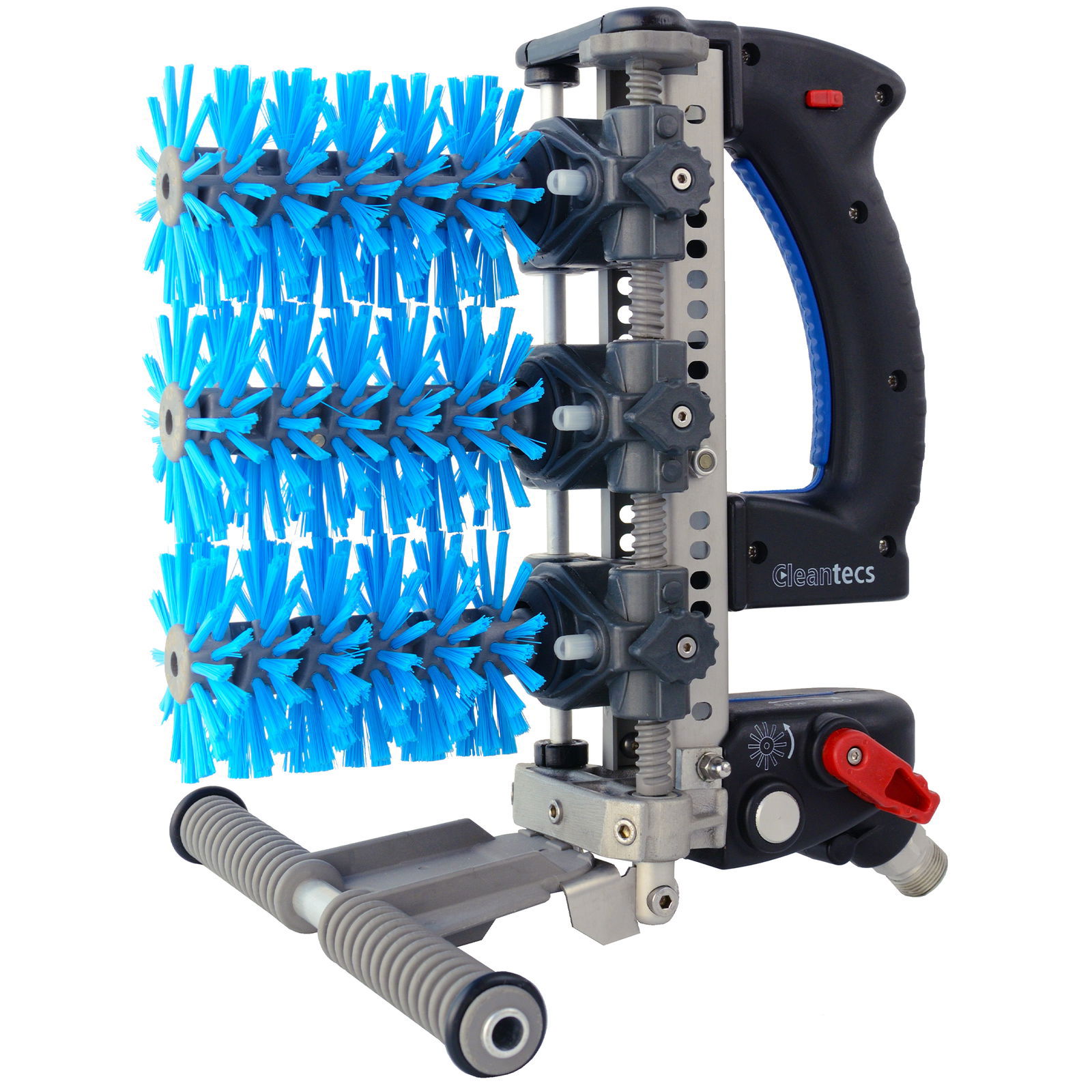
Professional systems such as those from Cleantecs combine pressure technology with rotating brushes powered by water. This ensures uniform mechanical cleaning without aggressive chemicals and without damaging sensitive surfaces.
A key advantage lies in the technology: brush rollers are driven directly by water flow. Cleaning and drive are combined, making the system efficient and robust.
In practice, this means: gentle, even, and faster cleaning while preserving module integrity.
Blinds: sensitive but crucial for overall appearance
Venetian blinds are often heavily soiled in spring. Fine dust, soot particles, and weather residues accumulate on both sides. At the same time, they are mechanically sensitive and difficult to clean thoroughly with conventional methods.
Specialized systems from Cleantecs provide a solution. Rotating brushes clean both sides simultaneously while the user guides the device along the slats.
This reduces time and ensures consistent results, especially for large properties or commercial buildings.
Why specialised systems make sense
Unlike standard pressure washers, brush systems distribute cleaning power evenly, requiring less pressure and protecting sensitive materials. Telescopic lances and modular systems also allow safe cleaning at height without scaffolding.
The pressure washer is an extremely efficient tool for spring cleaning. When used correctly, it enables fast, thorough and economical cleaning of terraces, paths and outdoor areas. The key difference lies not in the machine but in how it is used. Those who work in a material-appropriate way, control the pressure and proceed systematically achieve not only clean results but also protect surfaces and extend their lifespan.