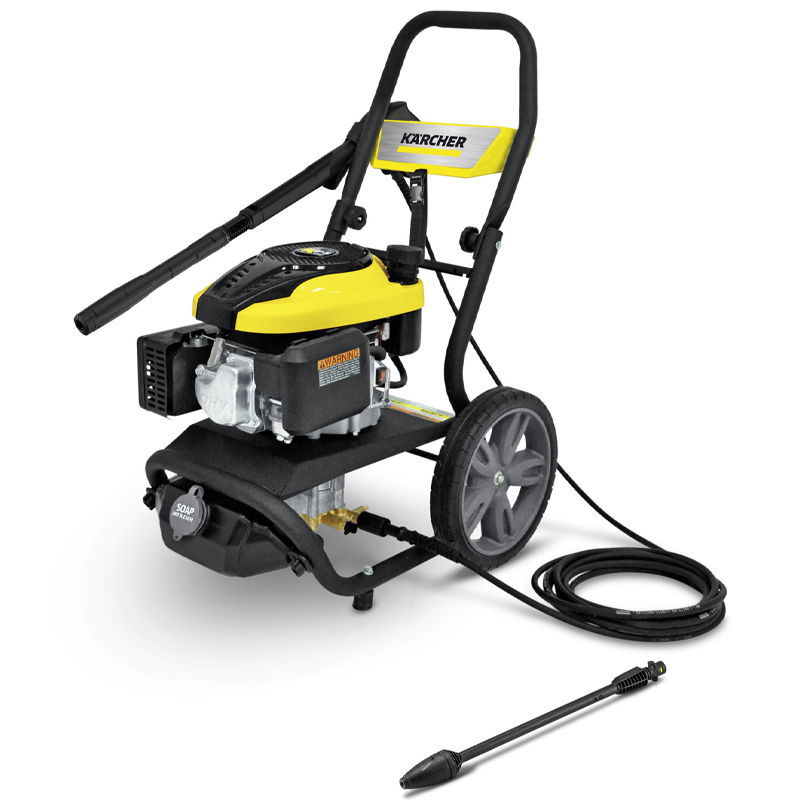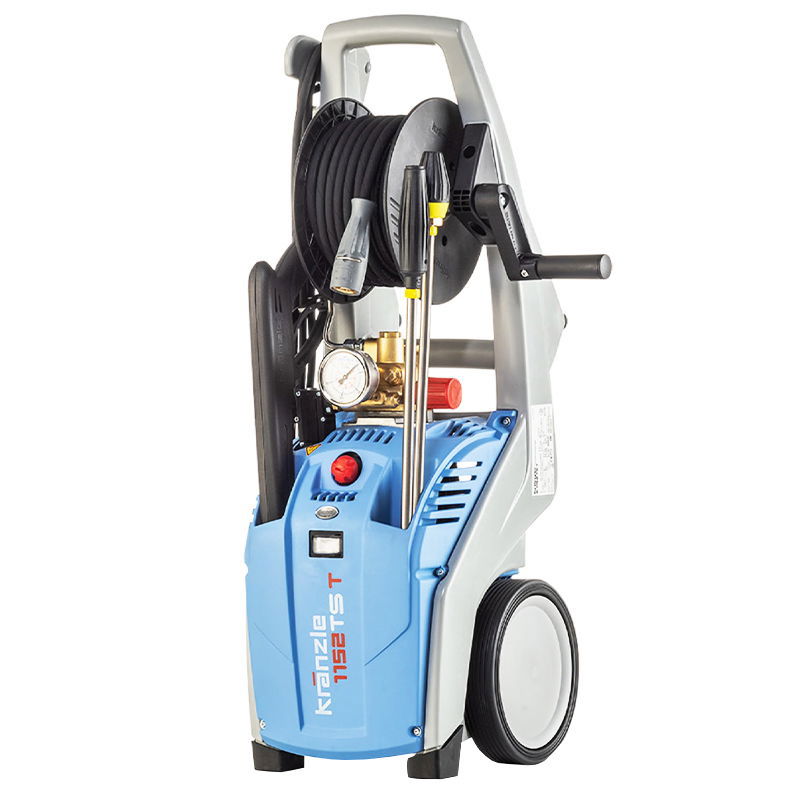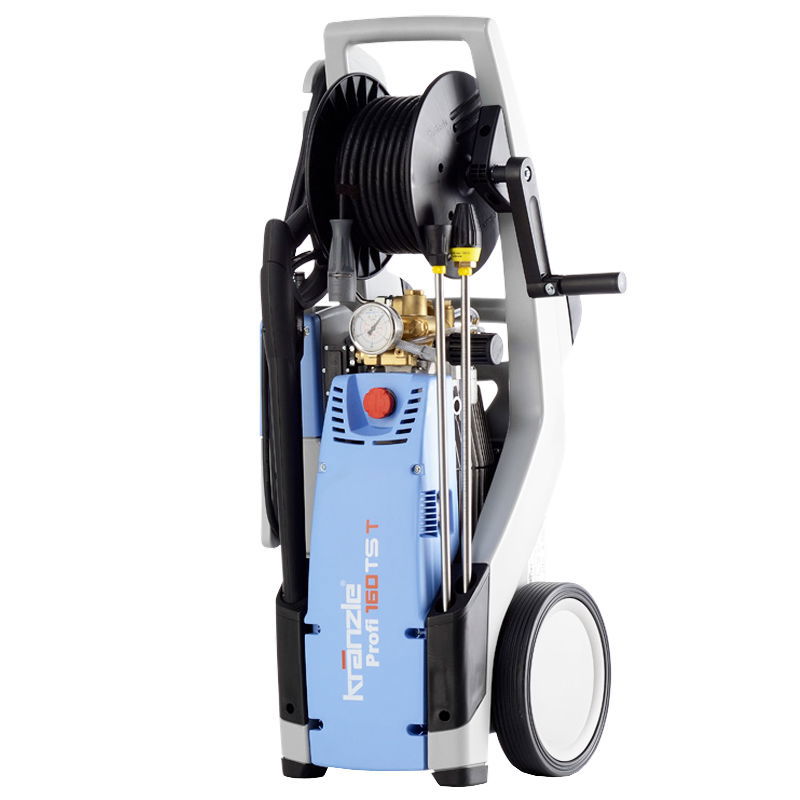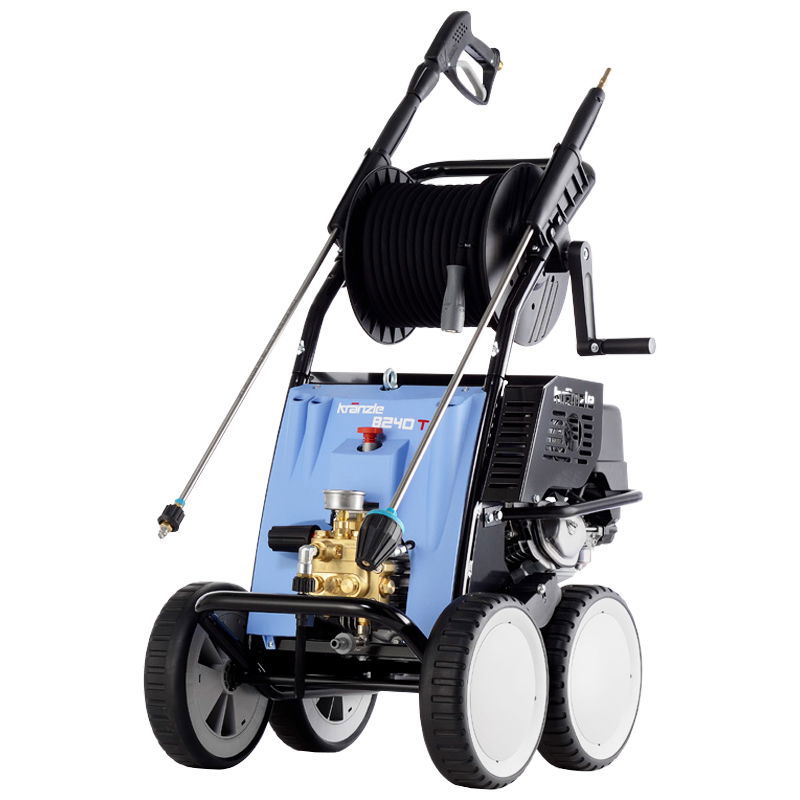
Illustrative image
Autumn brings leaves, moss and green film onto paths, terraces and facades, and soon after the preparation for winter service begins. For businesses, caretakers and tradespeople, it is the most intensive cleaning season of the year. A high-pressure cleaner takes over a large part of the manual work, provided you choose the right device for your task. The choice is wider than many think, and the decision between cold and hot water has a noticeable effect on speed, hygiene and operating costs.
In this article we explain what a high-pressure cleaner actually does, why autumn is the right moment, what to look for when choosing and using one, and which device suits which sector. We also show when renting is more worthwhile than buying and which mistakes cost the most time and material in practice. Running alongside this is the current Nilfisk autumn promotion, more on that at the end.
What a high-pressure cleaner does
Before we talk about the choice, a clear definition helps, because it explains why the technical values matter so much.
A high-pressure cleaner is a cleaning device that applies water to a surface under high pressure (measured in bar) and at a defined flow rate (litres per hour), in order to loosen and rinse away dirt mechanically. On a hot-water device, temperature is added as a third cleaning factor, additionally dissolving grease and oil.
The cleaning effect therefore comes from the interplay of three factors: pressure, water flow and, on hot-water devices, temperature. Anyone who looks only at the maximum pressure overlooks the other two and often picks the wrong device. That is exactly why we go through these factors in detail.
Why autumn is the peak season for the high-pressure cleaner
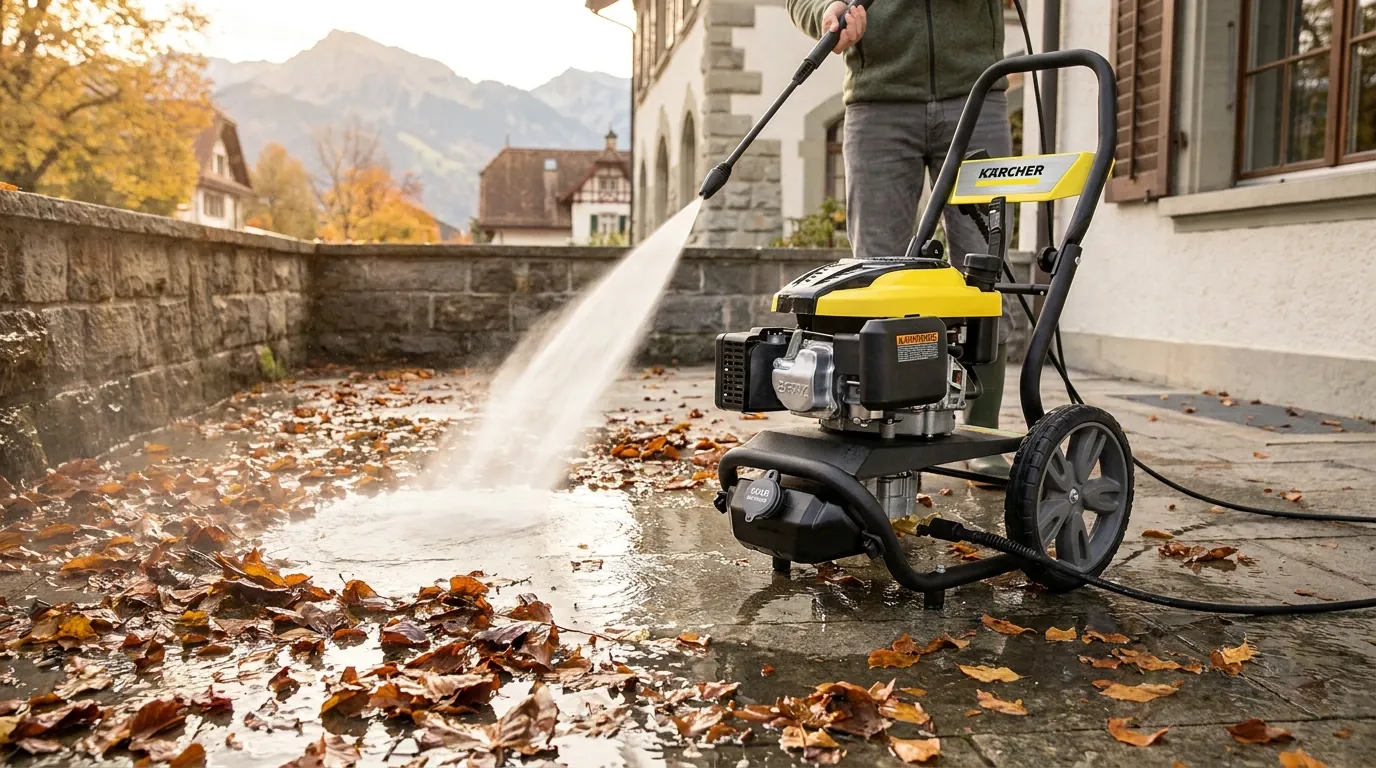
Wet leaves break down into a slippery film on stone surfaces, while moss and green film spread quickly during the wet season. On paths, forecourts and entrances this creates a real slipping hazard, and for many businesses the duty to keep their premises safe is a particularly important topic in autumn. Cleaning these surfaces thoroughly now reduces the risk of accidents and at the same time prevents lasting discolouration of the surface, which later only comes off with great effort.
At the same time, autumn is the right moment to prepare outdoor surfaces, vehicles and equipment for winter, before frost and grit arrive. Salt and grit attack unprotected surfaces, and whatever goes into winter clean and intact gets through the cold season far better. A high-pressure cleaner does this work faster and more thoroughly than a broom and brush, while sparing your employees' backs.
You will find the right device in the High-pressure cleaners category.
Cold or hot water: the decisive difference
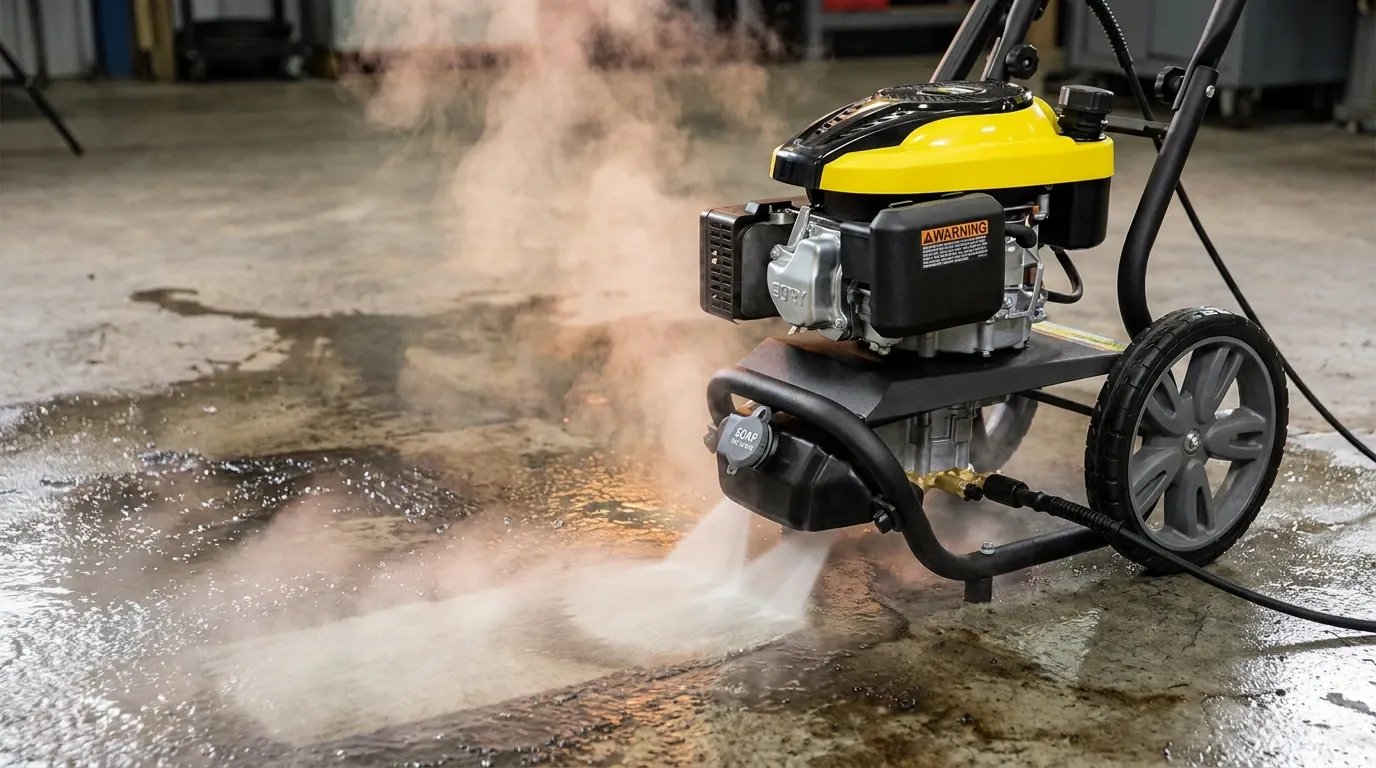
A cold-water high-pressure cleaner removes dirt mainly through pressure and flow. A hot-water high-pressure cleaner additionally heats the water and uses temperature as a cleaning factor in its own right. On greasy or stubborn dirt this makes a clear difference.
Just how big this difference is can be shown with figures. According to Kärcher, professional hot-water devices work with water up to around 85 degrees Celsius, whereas cold water is typically around 12 degrees. This heat speeds up cleaning by up to 35 percent compared with cold-water devices, partly because the surfaces then dry faster. The physical reason is simple: every 10-degree increase in temperature halves the reaction time needed to dissolve grease, oil and soot. What has to soak for a long time with cold water liquefies with hot water and is rinsed away immediately.
Two practical advantages follow from this. First, on many types of dirt, hot-water devices need considerably less cleaning agent, or none at all, which saves material and is gentler on the environment. Second, the combination of high pressure and water at around 85 degrees significantly reduces the microbial load, which in hygiene-sensitive areas is often enough on its own, without a disinfectant.
As a rule of thumb: for mineral dirt such as soil, dust, moss and leaves, a cold-water device is usually sufficient. As soon as grease, oil or hygiene requirements come into play, for example in agriculture, the workshop or catering, hot water is the more efficient and, in the end, often the more economical choice.
Illustrative image
What to look for when choosing
It is not pressure alone that determines cleaning performance, but the interplay between pressure (bar) and water flow (litres per hour). High pressure with a low flow does loosen the dirt, but only rinses it away slowly. Only a sufficient flow carries the loosened dirt quickly off the surface. So always pay attention to both values, not just the bar figure on the box.
In practice, these criteria are decisive:
- Pressure and surface: for most outdoor surfaces such as terraces, paths and yards, a medium pressure range is enough, combined with a sufficient flow. More pressure does not automatically mean a better result, but on delicate surfaces a higher risk of damage.
- Mobile or stationary: for changing locations a wheeled device, for a fixed washing bay a stationary solution with a permanent installation.
- Power supply: smaller devices run on 230 volts from a normal socket, powerful machines need three-phase 400-volt power. Check this before buying, so the device can actually be operated on site.
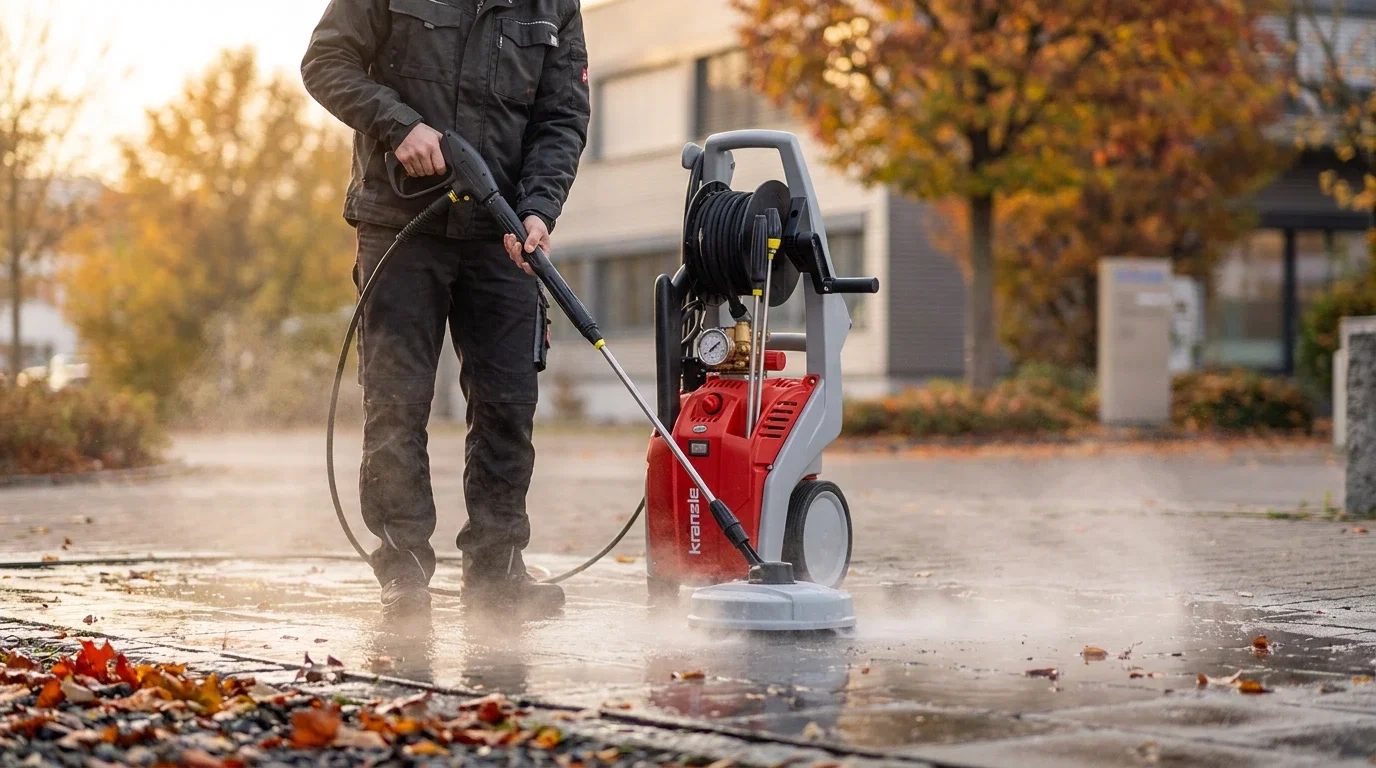
- Accessories: a surface cleaner considerably speeds up large floor and terrace areas and avoids the typical streaking. The right nozzle protects delicate surfaces and brings the power to where it is needed.
- For hot water: consider heating output, consumption and frost protection over winter, because a hot-water device has more technology that needs looking after.
A large selection of devices and matching accessories from Nilfisk, Kärcher and Kränzle can be found in the brand store. If you are unsure which combination of pressure, flow and accessories suits your business, our specialist team is happy to help.
Which device for which sector
The right high-pressure cleaner depends heavily on what you clean and how often. The following recommendations summarise the most common usage profiles.
- Trades and construction: robust, mobile devices that withstand daily site life. Depending on the dirt, cold or hot, with hard-wearing accessories and hoses.
- Agriculture: mostly hot water, to reliably dissolve organic dirt, grease and encrusted deposits in stables, on machines and vehicles. Here temperature pays off in particular.
- Catering and hotels: hot water for the hygienic cleaning of outdoor areas, grease separators and work surfaces. The reduction of germs through hot water is a real advantage in this setting and cuts the use of chemicals.
- Facility and caretaking: versatile, mobile cold-water devices with a surface cleaner for paths, yards, underground garages and entrances. Where hygiene or grease also come into play, a hot-water device usefully rounds out the range.
For cleaning facades and larger vertical surfaces, it is also worth looking at specialised accessories, which you will find in the Solar and facade cleaning category.
Illustrative image
Renting or buying
Not every business needs its own device. For seasonal peaks in autumn, a one-off major clean or a device used only a few times a year, renting can be the more economical solution. You get professional performance without acquisition costs, without tied-up capital and without the effort of maintenance and storage over winter.
Your own device pays off, on the other hand, as soon as you clean regularly. The purchase then amortises over time, and the device is ready for use at any moment. As a guide: those who only need power for individual jobs during the year rent, those who clean weekly or monthly buy. You can see which devices are currently available to rent under Rental equipment. When in doubt, a short conversation is worthwhile, in which we work out buying versus renting for your specific need.
Common mistakes to avoid
Many kinds of damage and moments of frustration can be avoided if you know these typical mistakes:
- Too little distance or too hard a nozzle on delicate surfaces such as wood, exposed concrete or old joints. This can remove material and leave lasting marks.
- Looking only at the pressure and ignoring the flow, so that the loosened dirt is not properly rinsed away.
- Using the wrong nozzle and thereby wasting power or risking damage.
- On greasy dirt, relying on cold water and compensating with a lot of product and time, instead of letting temperature do the work.
- Not draining a hot-water device before the first frost and thus risking frost damage to the technology.
Frequently asked questions
What is the difference between a cold-water and a hot-water high-pressure cleaner?
A cold-water high-pressure cleaner cleans through pressure and flow. A hot-water device additionally heats the water, up to around 85 degrees, and thus dissolves grease and oil considerably faster, often with fewer chemicals. For greasy or hygiene-sensitive dirt, hot water is the more efficient choice; for mineral dirt, cold water is enough.
How many bar do you need for a terrace and facade?
For most outdoor surfaces a medium pressure range is enough. More important than pressure alone is the flow, because it is what rinses away the loosened dirt. On delicate surfaces, work with more distance and a wider nozzle rather than maximum pressure.
Can you remove moss and green film with a high-pressure cleaner?
Yes. A high-pressure cleaner reliably removes moss and green film from paths, terraces and facades. In case of heavy build-up, a suitable cleaning agent and, where sensible, hot water strengthen the effect and prevent rapid regrowth.
Does a hot-water device really save time and product?
Yes. According to Kärcher, hot water cleans up to 35 percent faster than cold water, and every 10-degree increase in temperature halves the time needed to dissolve grease and oil. Because the heat takes over part of the work, many applications manage with little or no cleaning agent.
Is renting worth it instead of buying?
For occasional major cleans or seasonal peaks, a rental device is often more economical, because acquisition, maintenance and storage are eliminated. Those who clean regularly are better off in the long run with their own device.
Conclusion
Autumn is the right time to thoroughly clean paths, squares and facades and prepare surfaces for winter. Decisive for a good result are the right device, the interplay of pressure and flow, and the right choice between cold and hot water. Where grease, oil or hygiene play a role, hot water measurably saves time and material; for mineral dirt, a good cold-water device is enough. Anyone who is unsure should get advice before investing.
Benefit now: during the Nilfisk autumn promotion you get selected high-pressure cleaners and vacuums at promotional conditions, until 30 November. You will find the right devices in the High-pressure cleaners category. Not sure which model suits your business: our team is happy to advise you, at the shop in Diepoldsau or directly via the contact form.