AI illustration
A misstep on a wet floor, a pallet sliding off a pallet truck, a stray screw on the workshop floor: it takes very little to injure a foot. That is why safety shoes are part of the basic equipment in many businesses, whether in the warehouse, the workshop, facility management or a commercial kitchen. Yet the same question comes up with every purchase: which protection class do you really need? S1, S2, S3, and what do the new markings S1PS and S3S on many current models mean? This article explains the protection classes under the EN ISO 20345:2022 standard, shows when S3 safety shoes make sense and when a lighter shoe is enough, and summarises what applies to employers in Switzerland. The new adidas safety shoes, now available from Heros Hygiene, serve as examples.
What are safety shoes?
Safety shoes are shoes with a protective toe cap that withstands a test energy of 200 joules under the EN ISO 20345 standard. Depending on the protection class, further tested properties are added, such as a closed heel area, antistatic properties, a water-repellent upper or resistance to penetration from below.
They differ from occupational shoes without a toe cap (EN ISO 20347, marked O1 to O7). These are comfortable work shoes but do not protect the toes from falling loads. Where the hazards at the workplace call for foot protection, even sturdy leisure or hiking shoes are no substitute for certified safety footwear. Suva states this explicitly in its answers on foot protection.
Protection classes under EN ISO 20345:2022
The classes build on one another. Each higher class includes all requirements of the lower class and adds to them:
- SB: basic requirements, above all the 200 joule toe cap.
- S1: additionally a closed heel area, antistatic properties and energy absorption in the heel. Typical for dry indoor areas.
- S2: as S1, plus resistance of the upper to water penetration and absorption (WPA).
- S3: as S2, plus penetration resistance and a cleated outsole. The standard for construction, trades and outdoor work.
- S6 and S7: as S2 or S3, with the whole shoe additionally tested as waterproof (WR).
For rubber or polymer boots there are the separate classes S4 and S5, typical for very wet environments such as agriculture, food processing or cleaning with lots of water. You will find an overview in our category Work and safety shoes.
New since 2022: what S1PS and S3S mean
The 2022 revision of the standard distinguishes penetration protection more precisely. In the past, P simply stood for a penetration-resistant sole. Today the marking shows which insert is fitted and which test nail was used:
- P: metal insert.
- PL: non-metallic insert, tested with a nail of 4.5 mm diameter.
- PS: non-metallic insert, tested with a thinner nail of 3.0 mm diameter.
A shoe marked S1PS is therefore an S1 shoe with metal-free penetration protection that has also been tested against thin, pointed objects. S3S stands for an S3 shoe with exactly this insert. Non-metallic inserts are lighter and more flexible than steel, insulate better against cold and do not set off metal detectors.
Slip resistance has changed as well. The former markings SRA, SRB and SRC no longer appear in the new standard. The test on ceramic tiles with a soap solution is now mandatory for all safety shoes. Shoes marked SR have additionally passed the more demanding test on tiles with glycerine. Shoes still certified under the old standard continue to carry the familiar SRC markings.
Other markings that matter when buying
Besides the protection class, the label often shows further symbols. The most important ones for everyday work:
- ESD: electrostatic dissipation within a narrowly defined resistance range. Important in electronics manufacturing, laboratories and wherever sensitive components need protecting. ESD goes further than the basic antistatic property that already applies from S1.
- HRO: outsole resistant to contact heat, for example on hot asphalt or warm surfaces.
- FO: outsole resistant to fuel and oil, useful in workshops, logistics and industry.
- WR: the whole shoe is waterproof, not just the upper.
AI illustration
Which protection class for which business?
The right shoe is not decided by the industry alone, but by the specific hazard at the workplace. As a practical guide:
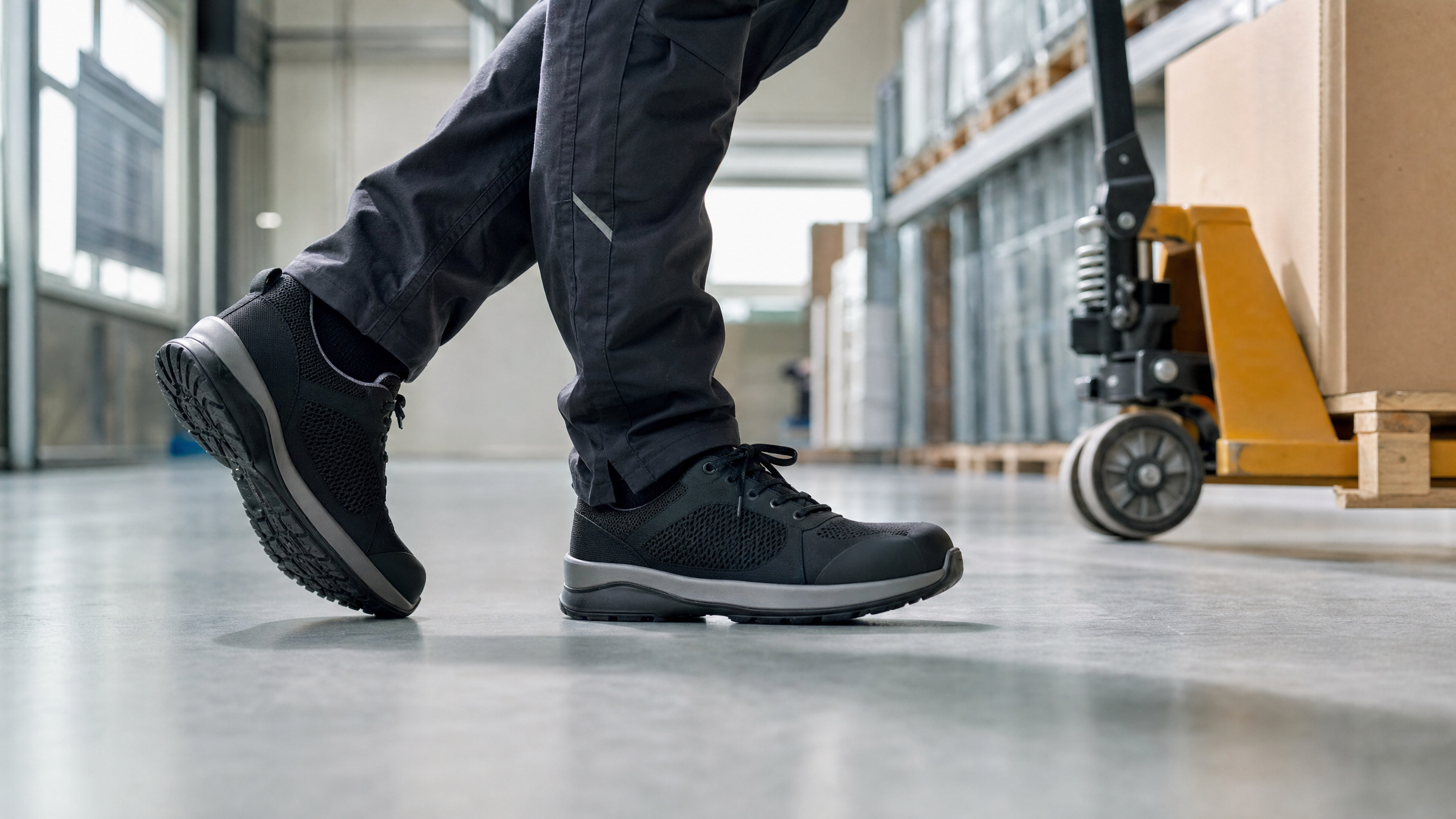
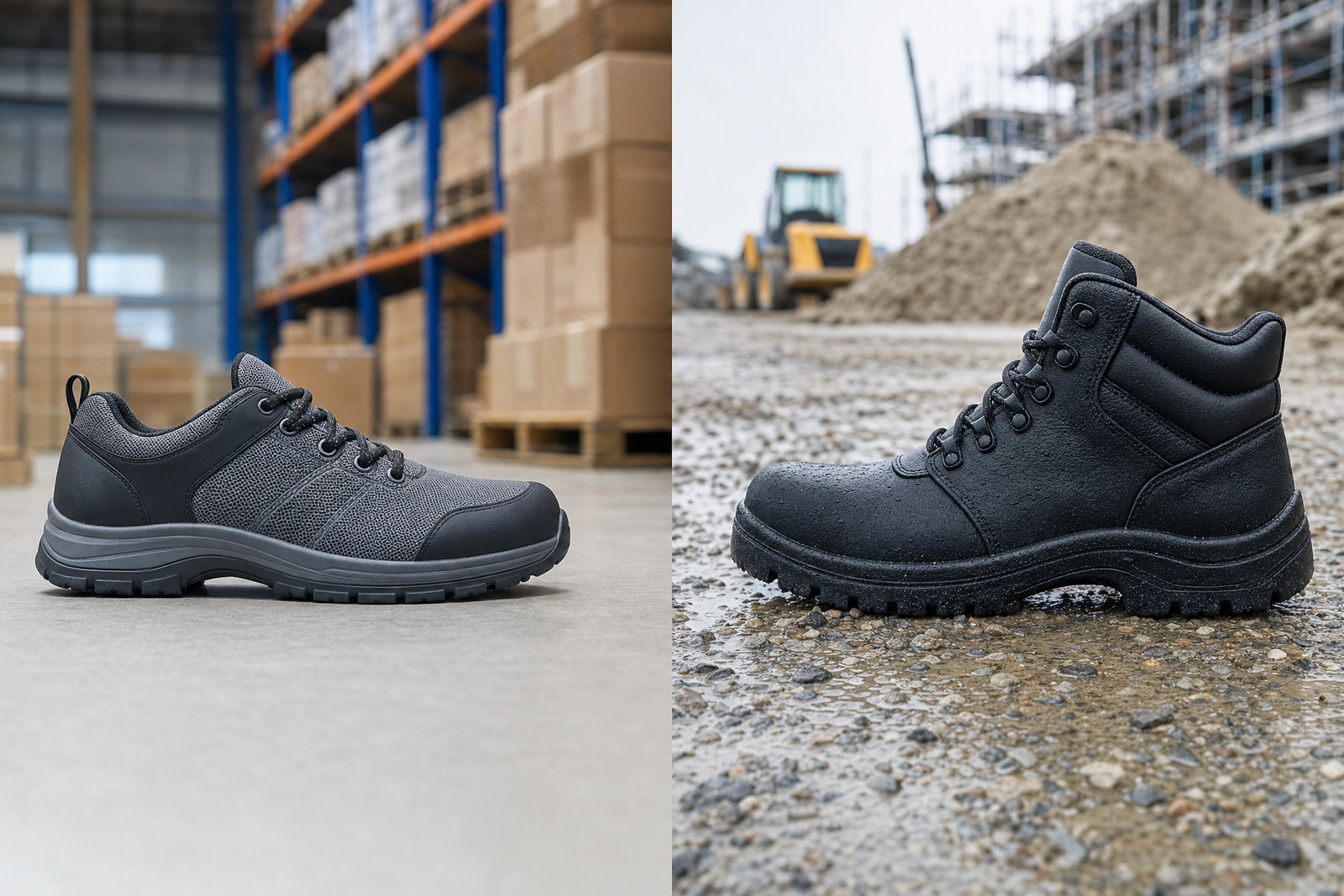
- Warehousing, logistics, production in dry halls: S1P or S1PS is usually enough. Light, breathable and comfortable for long walking distances.
- Electronics, laboratories, production with sensitive components: additionally ESD.
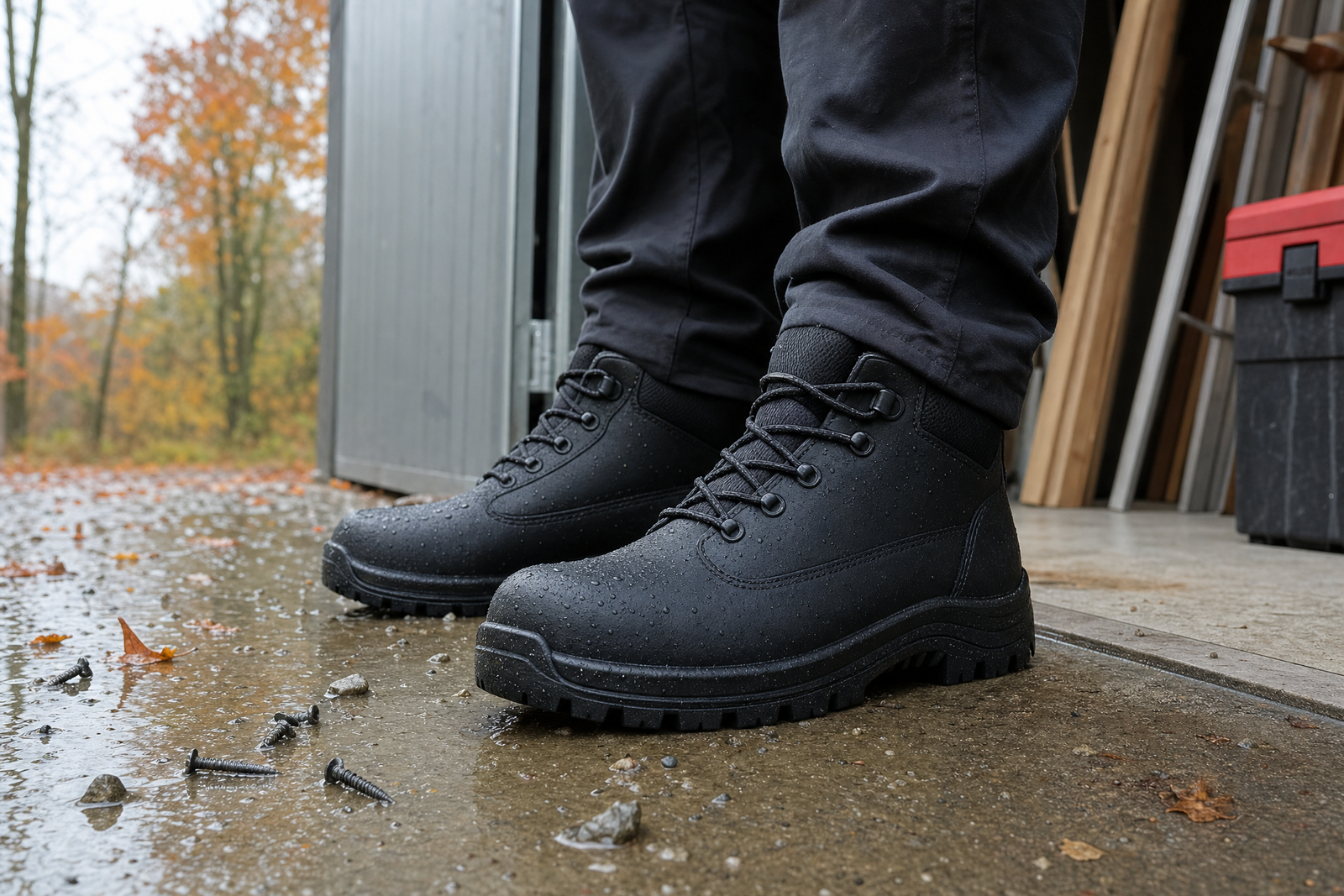
- Trades, construction, caretaking, outdoor areas, winter services: S3 or S3S safety shoes, because moisture, nails, shards and uneven ground come together here.
- Hospitality and commercial kitchens: closed, slip-resistant shoes, often clogs or slip-ons in SB or S2 with the SR test. Grip on wet tiles and an easy-to-clean surface are what count.
- Very wet areas: boots in class S4 or S5.
A rule of thumb: as much protection as necessary, as light as possible. An S3 shoe in a dry warehouse is not wrong, but it is often heavier and warmer than needed. That reduces acceptance, and a safety shoe only protects if it is actually worn.
adidas safety shoes at Heros Hygiene
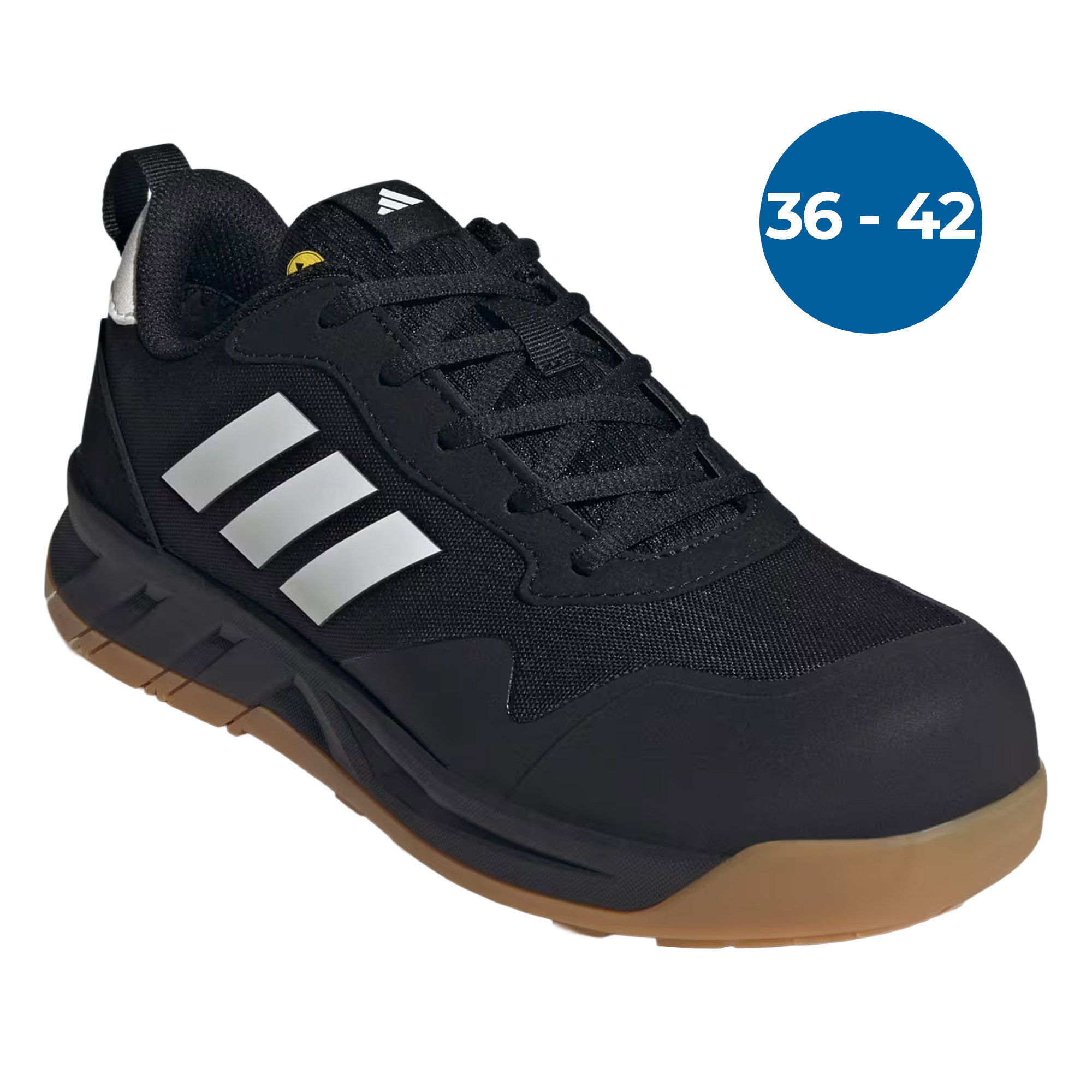
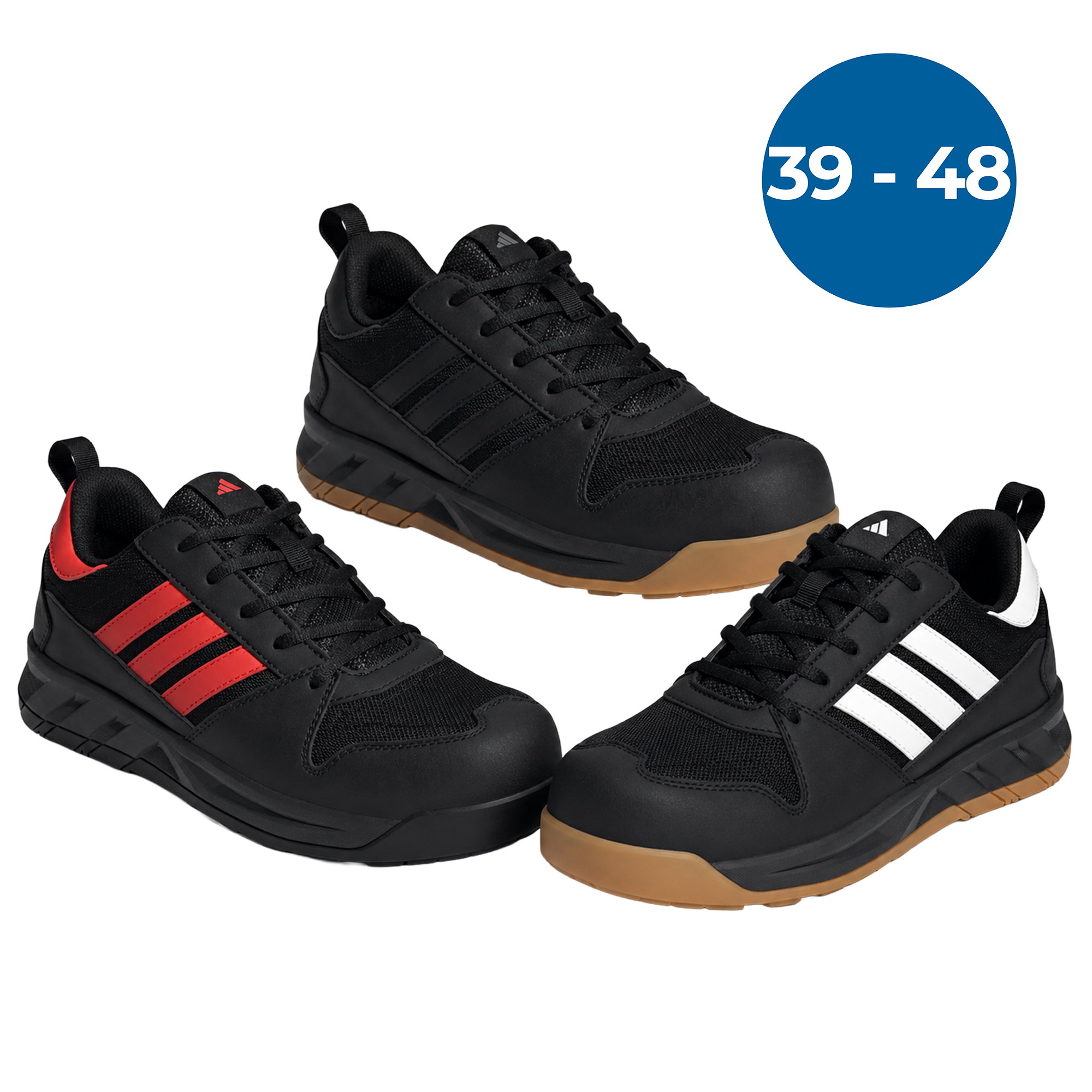
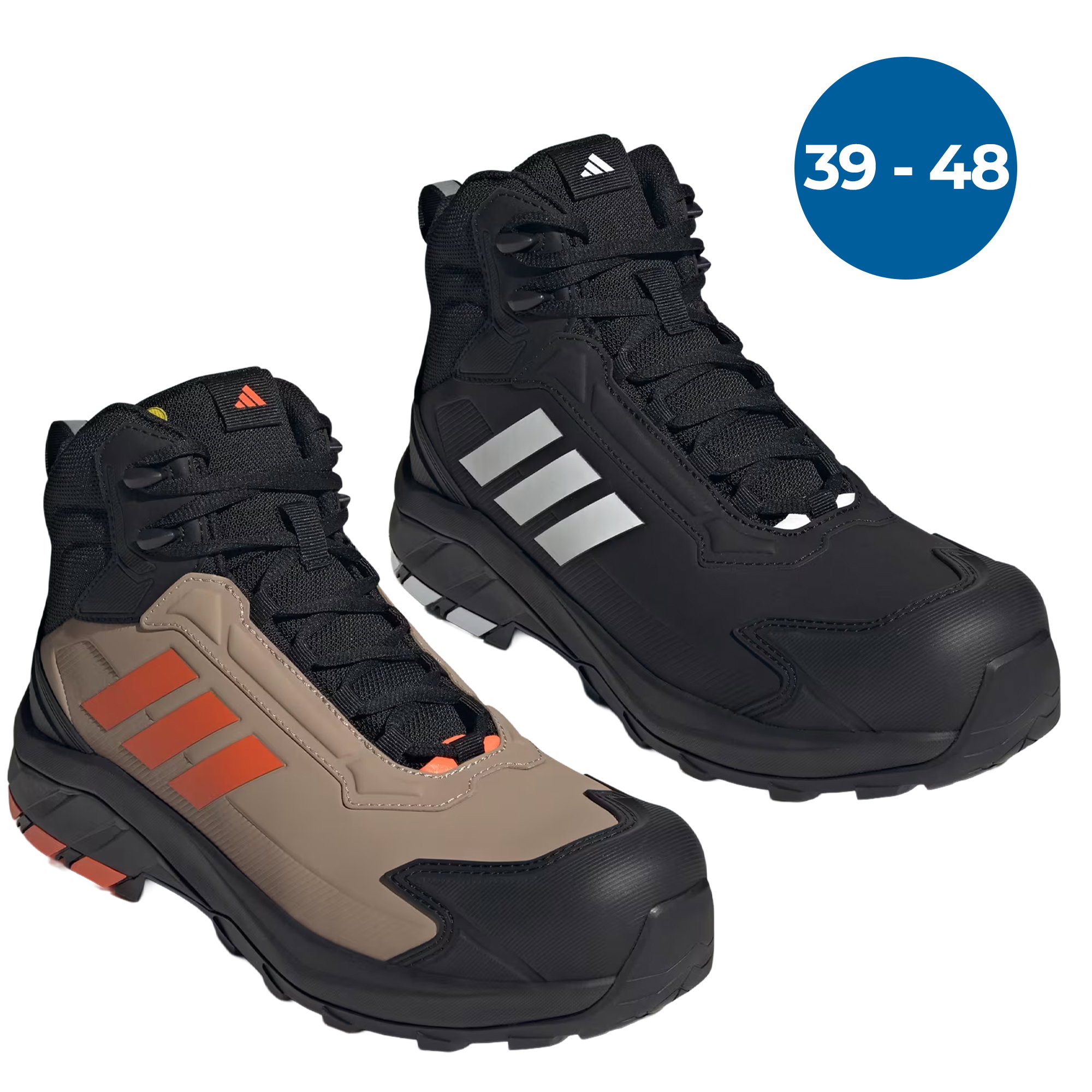
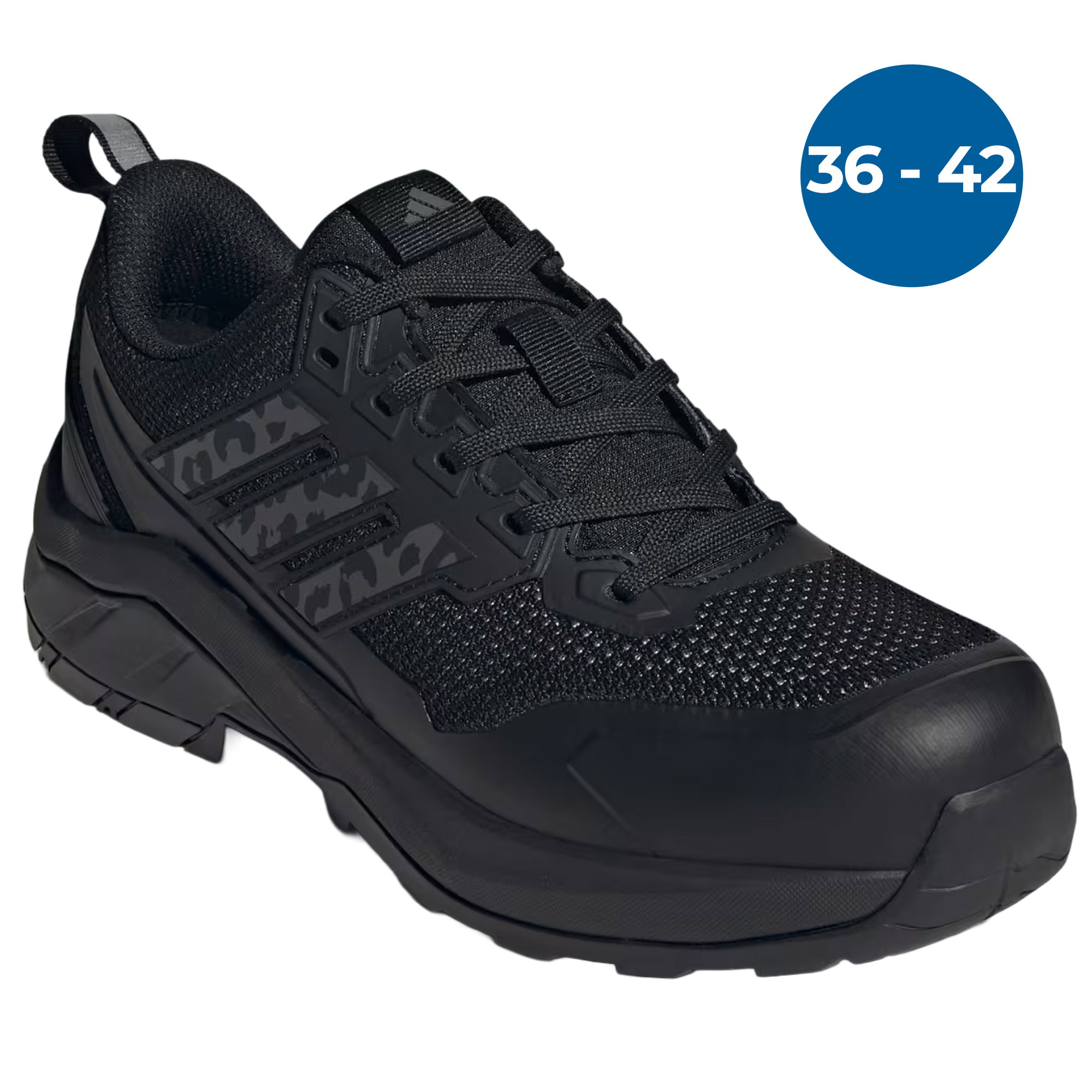
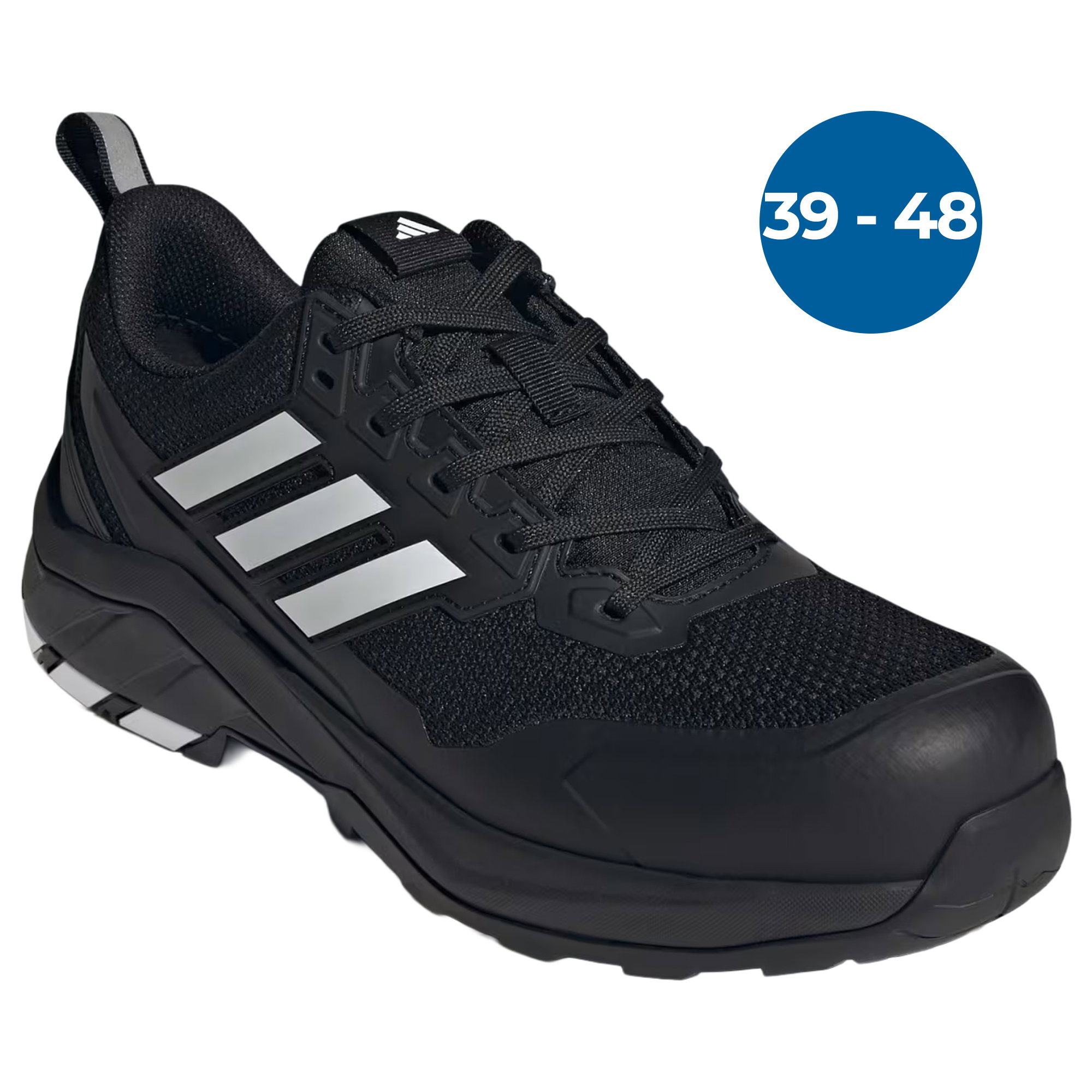
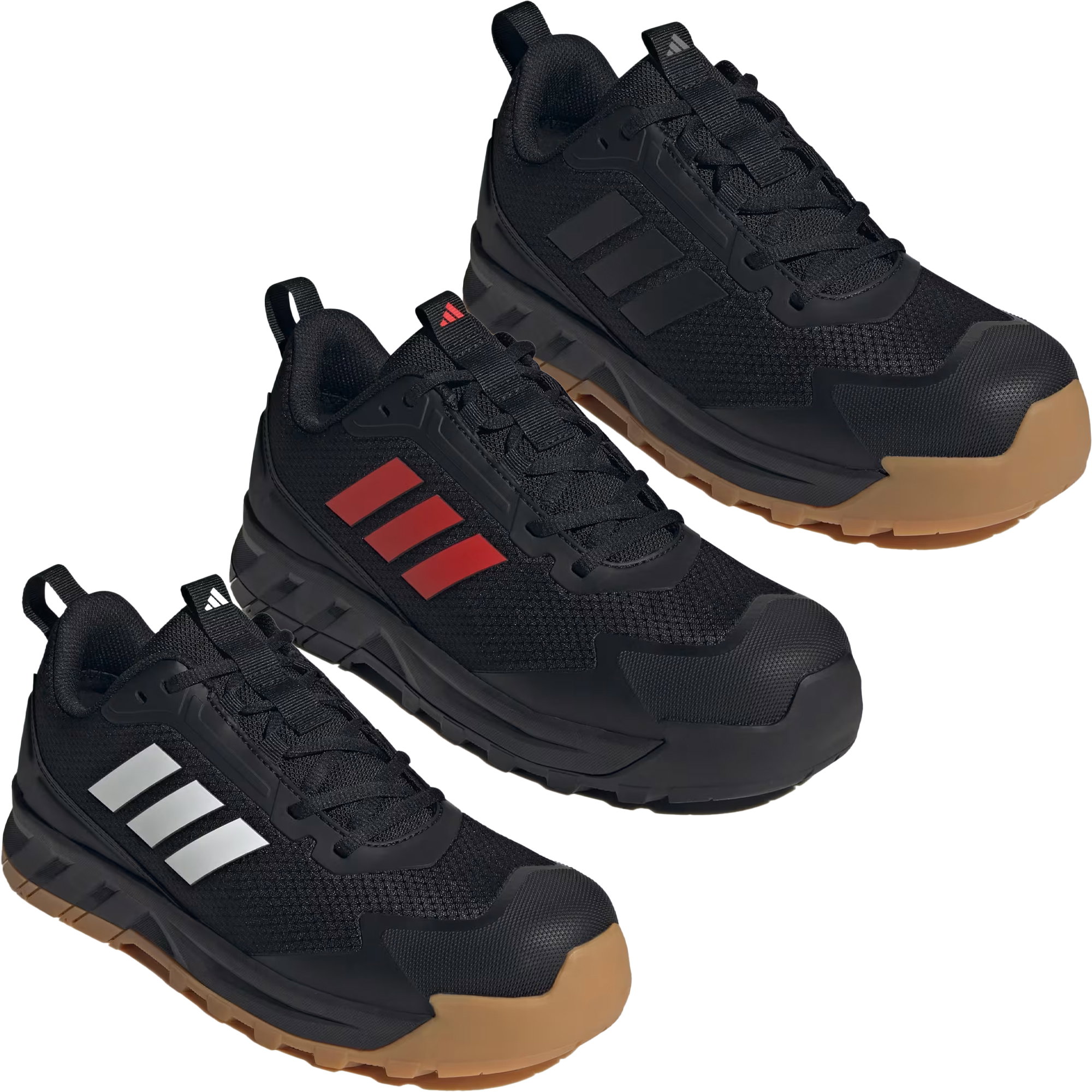
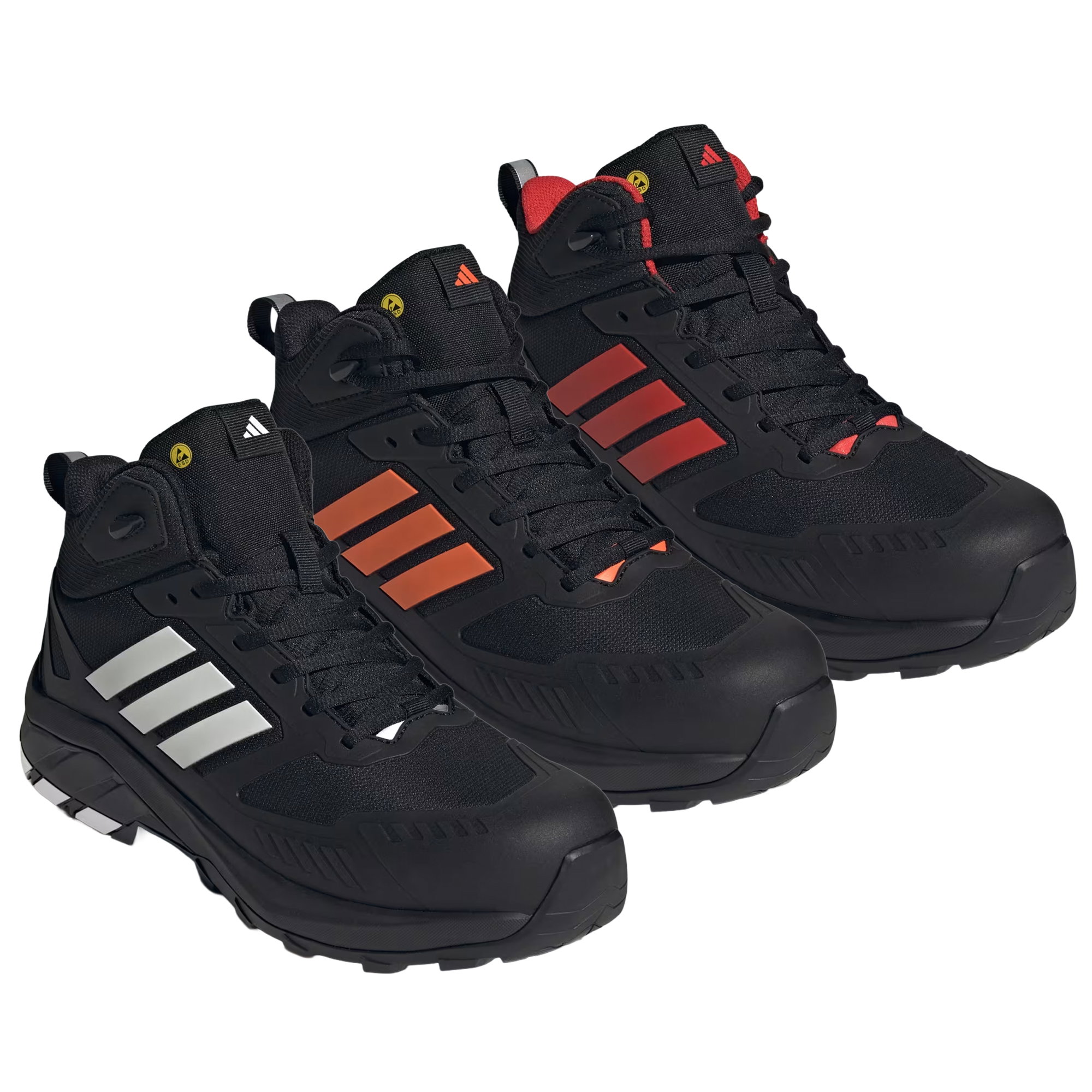
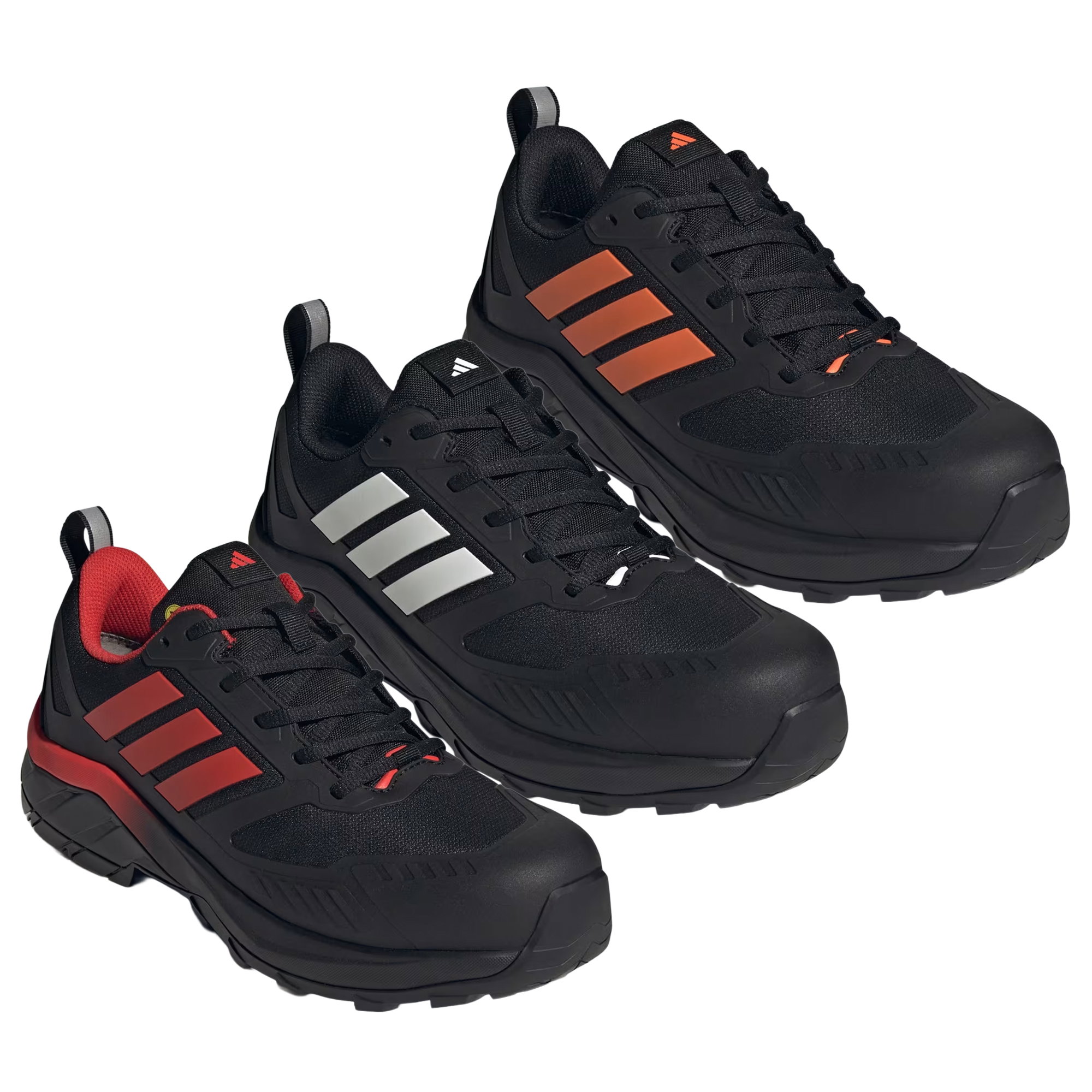
Heros Hygiene now offers nine models of adidas safety shoes, all certified to EN ISO 20345:2022, with metal-free penetration protection and sporty cushioning. They cover the two protection classes most often needed in everyday work:
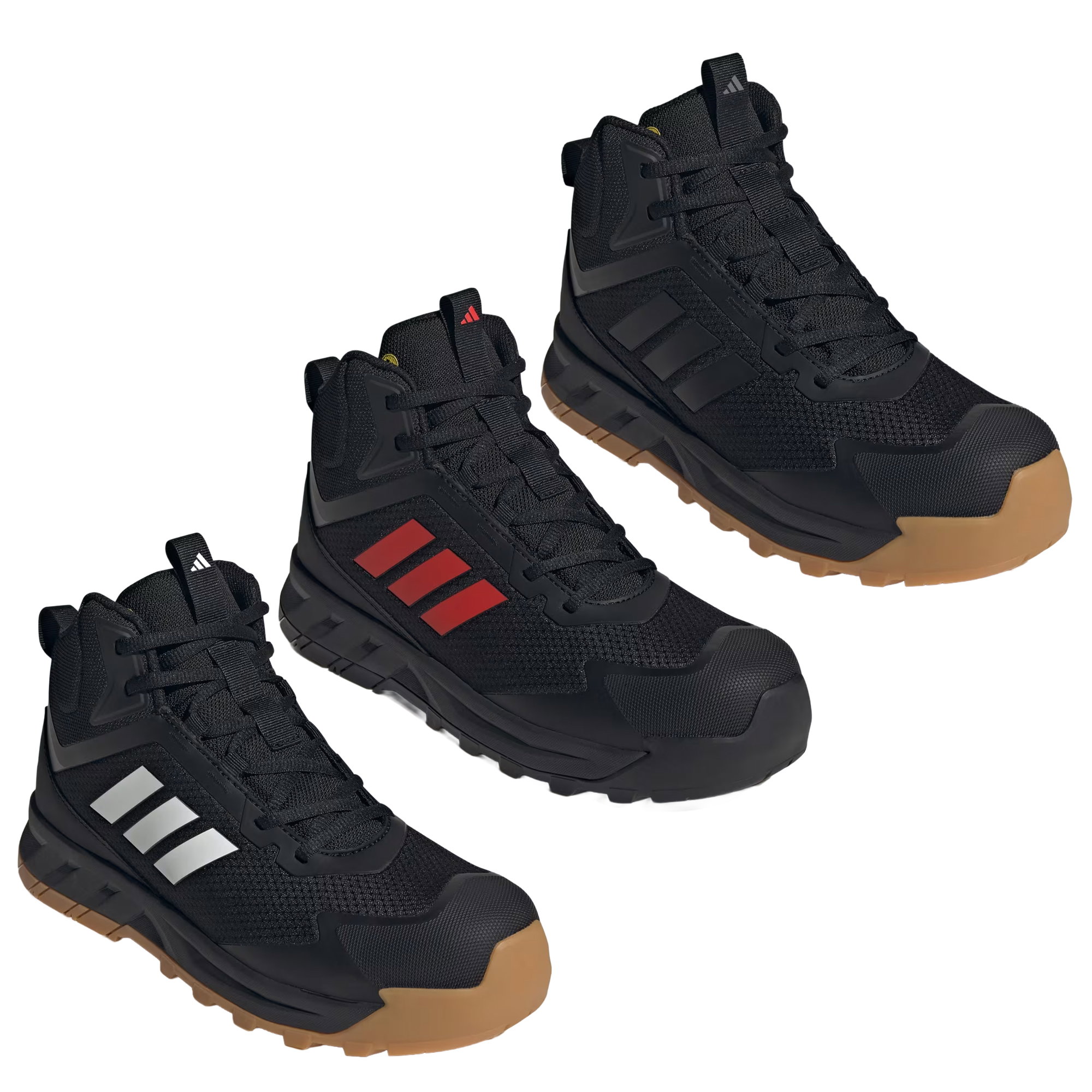
- S1PS for dry indoor areas: the models Aedus (women's and men's), Motix and Argaro. Aedus and Motix are also ESD. Light and breathable, designed for warehousing, logistics, production and service. You will find them in the category S1P safety shoes.
- S3S for outdoor work and trades: the models Torava, Torava Mid, Gradix, Gradix Mid and Granor Mid, low-cut or mid-cut. Water-repellent upper, cleated outsole and several ESD models. Go to the category S3 safety shoes.
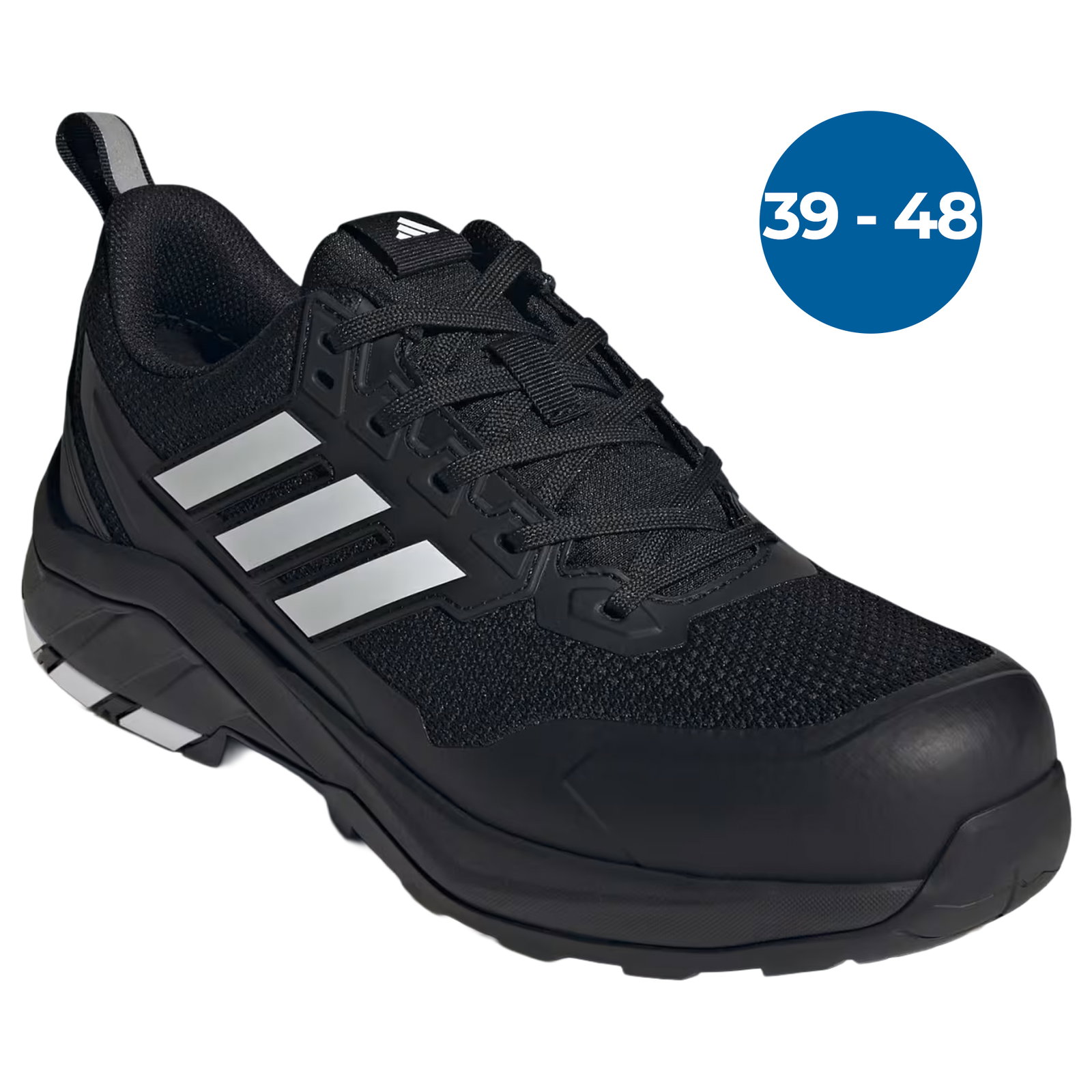
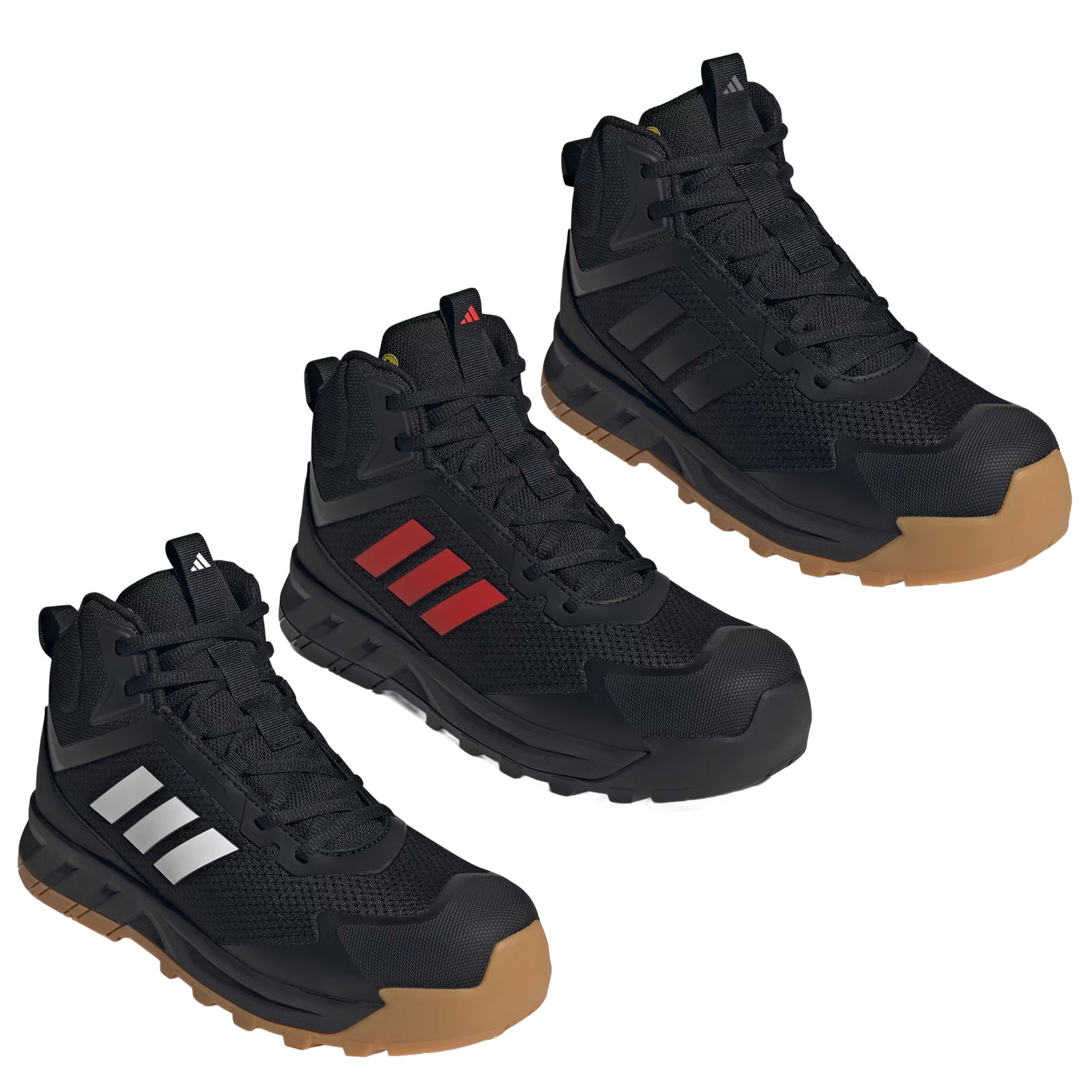
The combination of metal-free penetration protection, ESD and a sporty look makes the range especially interesting for teams who walk and stand a lot and find classic safety shoes too heavy. See the full selection in the adidas brand store.
What applies to employers in Switzerland
Whether safety shoes must be worn follows from the hazards at the workplace. If a hazard cannot be eliminated through technical or organisational measures, the business must provide personal protective equipment. According to Suva, based on the Swiss Ordinance on the Prevention of Accidents and Occupational Diseases (VUV, Art. 5 and 90), the employer also bears the full cost. This also applies to apprentices and temporary staff, and to replacing shoes worn out through normal use. Suva itself does not contribute to the cost of safety shoes.
There is no fixed service life. Shoes must be replaced as soon as their protection is no longer guaranteed. Where work is permanently wet, Suva recommends a second pair so the shoes can dry in between.
Common mistakes when buying
- Protection class too high: S3 everywhere, even in dry office or warehouse areas. The result is heavy, warm shoes that people are reluctant to wear.
- Fit underestimated: ideally try on safety shoes in the afternoon and with the socks worn at work. The toes must not touch the toe cap. Routinely buying one size larger, on the other hand, often leads to poor hold.
- Slip risk overlooked: on wet floors the sole matters more than the toe cap. It is just as important to keep moisture and dirt out of the building in the first place, for example with a dirt-trap mat at the entrance.
- Wearing damaged shoes: after a heavy impact on the toe cap, with a worn sole or a loose insert, the shoe should be replaced.
AI illustration
Frequently asked questions
When are safety shoes mandatory in Switzerland?
There is no blanket obligation for all industries. Safety shoes must be worn when the hazards at the workplace require foot protection and the hazard cannot be eliminated in any other way. The employer decides which shoes are needed, and employees must wear them.
Who pays for safety shoes?
If safety shoes are needed because of workplace hazards, the employer bears the full cost. Suva bases this on Articles 5 and 90 of the Swiss Ordinance on the Prevention of Accidents and Occupational Diseases (VUV). This also applies to apprentices, temporary staff and the replacement of worn-out shoes.
Which is better, S1 or S3?
Neither is better in itself, they are made for different uses. S1 is lighter and more breathable and suits dry indoor areas. S3 additionally protects against moisture and penetration from below and is the right choice for construction, trades and outdoor work.
What does S3S mean on safety shoes?
Since EN ISO 20345:2022, S3S denotes a class S3 safety shoe with non-metallic penetration protection tested with a thin nail of 3.0 mm diameter. The insert is lighter and more flexible than steel and does not trigger metal detectors.
Which safety shoes are needed in a kitchen?
In hospitality, grip on wet and greasy tiles matters most. Closed, easy-to-clean clogs or slip-ons with a toe cap have proven themselves, for example in class SB or S2 with the additional SR test. Whether a toe cap is mandatory depends on the business's risk assessment.
Conclusion
The right protection class follows the hazard, not gut feeling. For dry indoor areas, light S1P or S1PS shoes are enough. Where moisture, nails and outdoor work come into play, S3 or S3S safety shoes are the right choice. The new EN ISO 20345:2022 standard makes the differences in penetration protection and slip resistance more visible, so a look at the label pays off. Heros Hygiene, your Swiss specialist partner for hygiene, cleaning and business supplies based in Diepoldsau in the Rhine Valley, now offers adidas safety shoes in S1PS and S3S, with metal-free penetration protection and sporty comfort.
You will find suitable models in our category Work and safety shoes. For team outfitting and larger quantities, our specialist team will be happy to advise you: get in touch.