AI-generated illustrative image
With the first cool days, the cold and flu season begins, and in every business the risk rises that infections spread via hands and surfaces. Door handles, keyboards, counters and shared kitchens are the typical transmission paths. Anyone who wants to avoid absences in the team puts clear hygiene in place in good time, not only when half the staff is already ill.
This article shows what matters for disinfection in a business. You will learn why cleaning and disinfecting are two different things, how to disinfect surfaces correctly, when washing hands is enough and when hand disinfection makes sense, and which dispensers and products make everyday work easier.
Cleaning and disinfecting are not the same
Cleaning removes visible dirt and a large share of germs mechanically, for example with water and a detergent. Disinfecting additionally reduces the number of disease-causing germs to a harmless level in a targeted way, with a tested disinfectant and a defined contact time. In a business the order matters: clean first, then disinfect where needed.
Not every surface needs to be disinfected. In offices and retail, thorough cleaning is usually enough. Disinfection is applied in a targeted way at contact points and wherever food or patients are involved. The order is important: on a dirty surface a disinfectant works less well, because the dirt shields the germs. Clean first, then disinfect. The right disinfectant depends on what you want to achieve.
Surface disinfection, what matters
AI-generated illustrative image
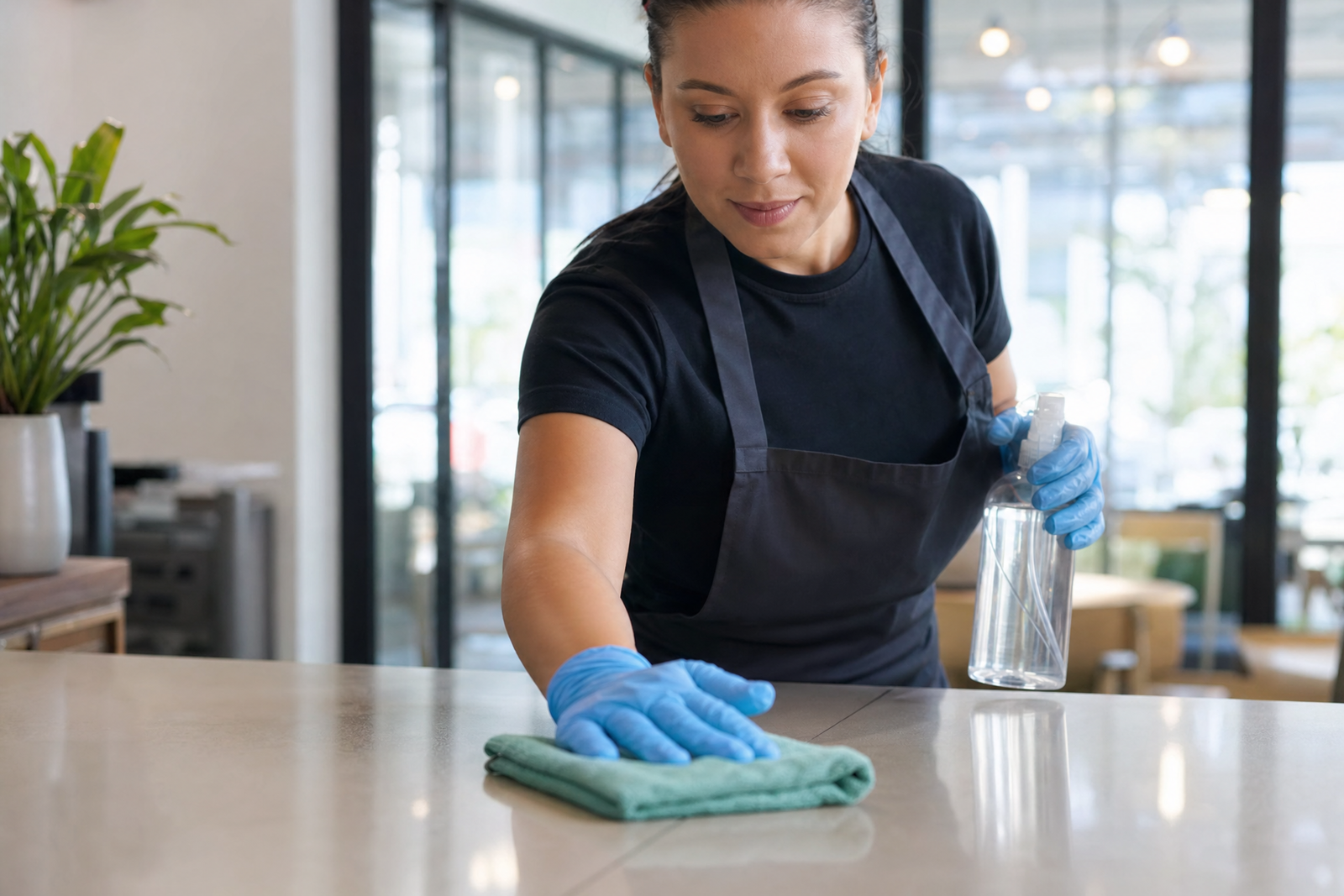
The first criterion is the spectrum of activity. A product labelled limited virucidal works against enveloped viruses, which include the influenza and the coronaviruses. Against non-enveloped viruses such as noroviruses, you need a product declared virucidal. Against bacteria the label reads bactericidal. Which spectrum a product covers is stated on the data sheet and the authorisation, not in the marketing text.
The contact time is just as important. The surface must stay visibly wet for the time stated on the data sheet, otherwise the product does not work fully. Wiping dry too early is the most common mistake. Keep to the stated dosage, never mix detergent and disinfectant, and after the contact time wipe again where surfaces come into contact with food.
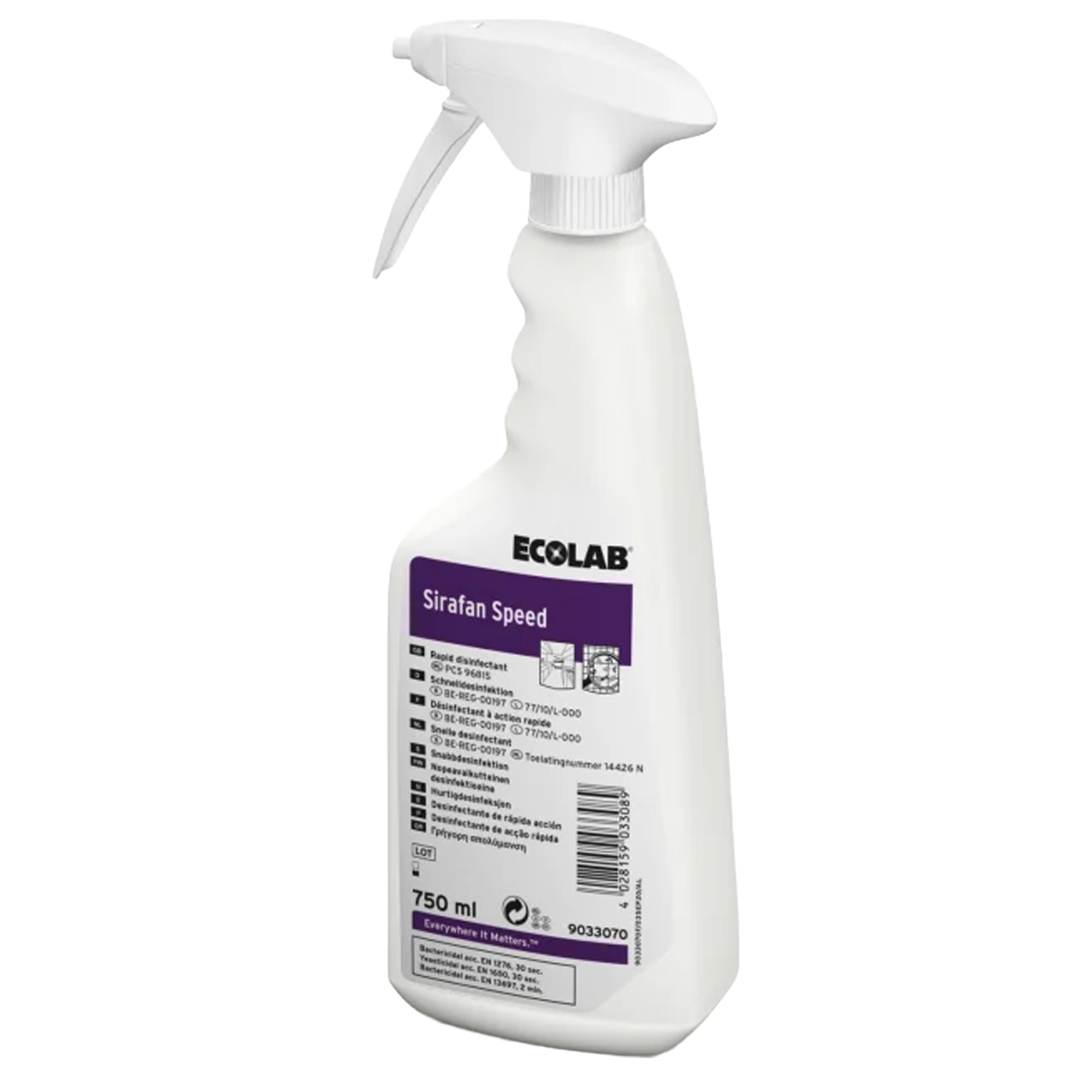
For fast everyday use, ready-to-use solutions are practical, for example an alcohol-based rapid disinfection for small surfaces. For larger quantities and sensitive noses there are concentrates and gentler products. You will find the whole selection in the category disinfectants.
Hands, wash or disinfect
Hand washing and hand disinfection both have their place. Washing with soap removes dirt and part of the germs mechanically and is enough in normal office life, for example before eating or after using the toilet. Hand disinfection works faster and more thoroughly against germs and is useful wherever the infection risk is higher, in care and hospitality, after contact with ill people or when there is no sink nearby. Visibly soiled hands are washed first.
For disinfection the technique matters: put enough product into dry hands, cover all surfaces down to the fingertips and nail folds and rub in until the skin is dry, usually around 30 seconds. You will find the suitable products in the category hand cleaning.
In winter especially, the skin suffers from frequent washing and disinfecting. A moisturising, re-fatting cream prevents chapped skin and belongs in every hygiene plan, because intact skin is the best protection. Products for this are in the category skin care.
Dispensers and consumables
AI-generated illustrative image
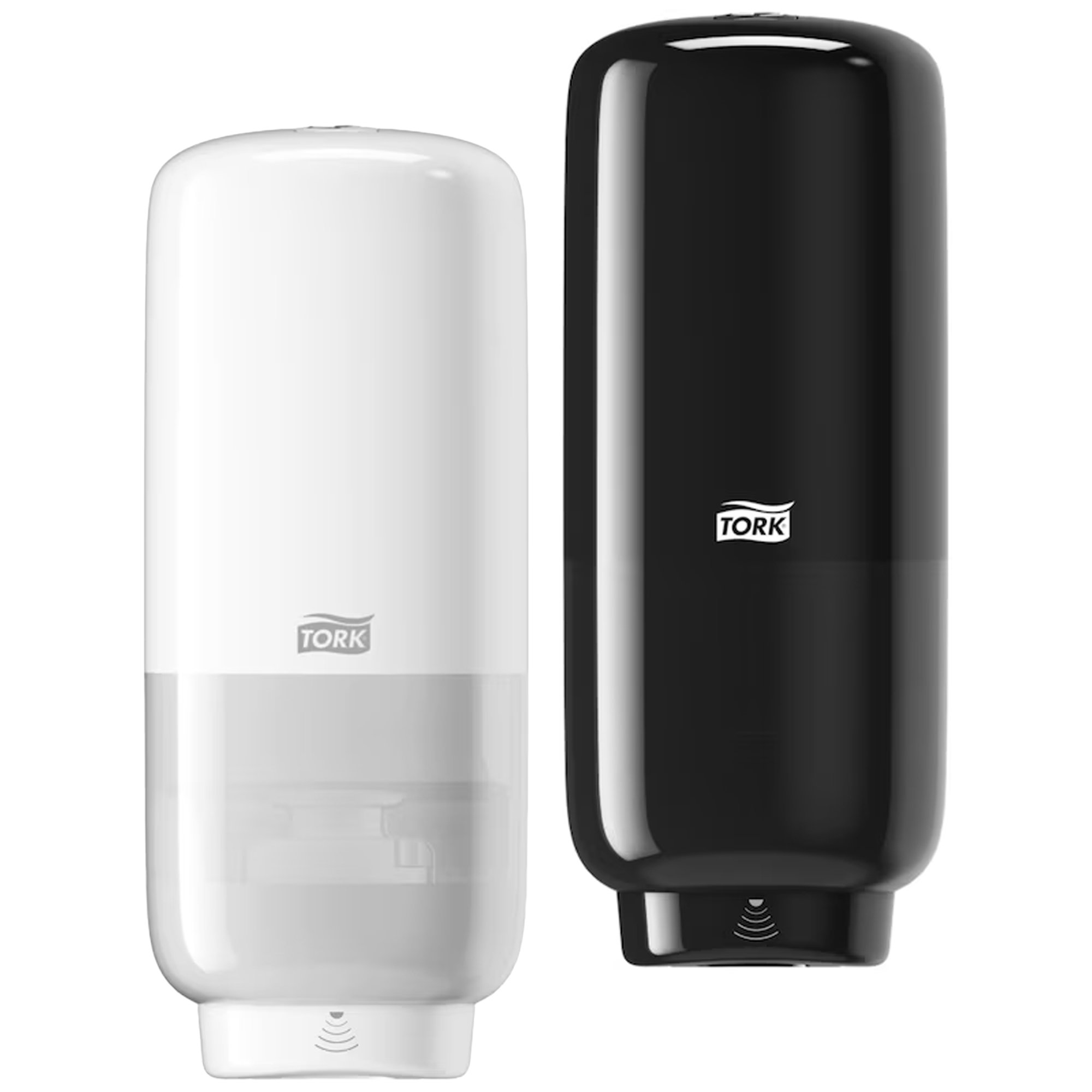
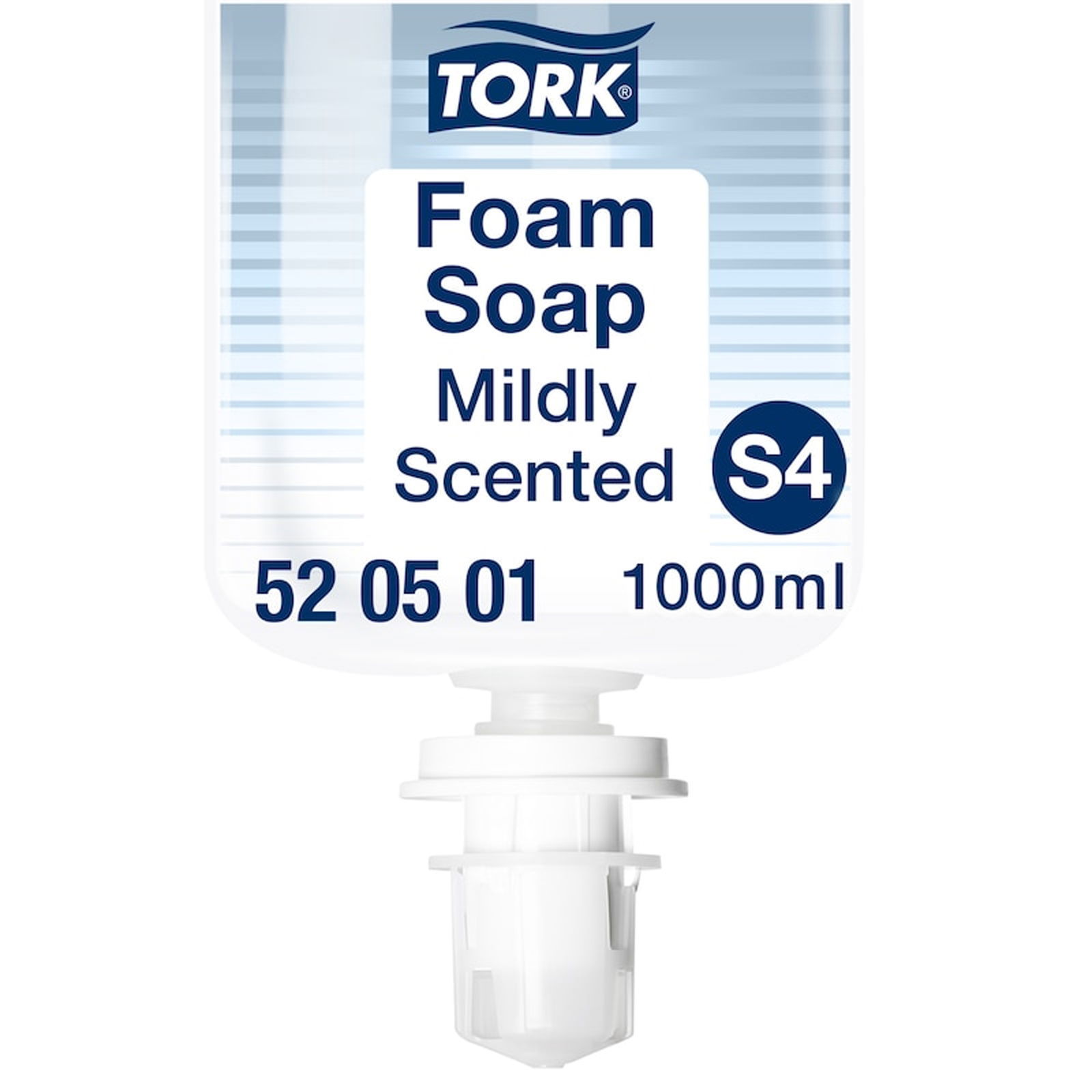
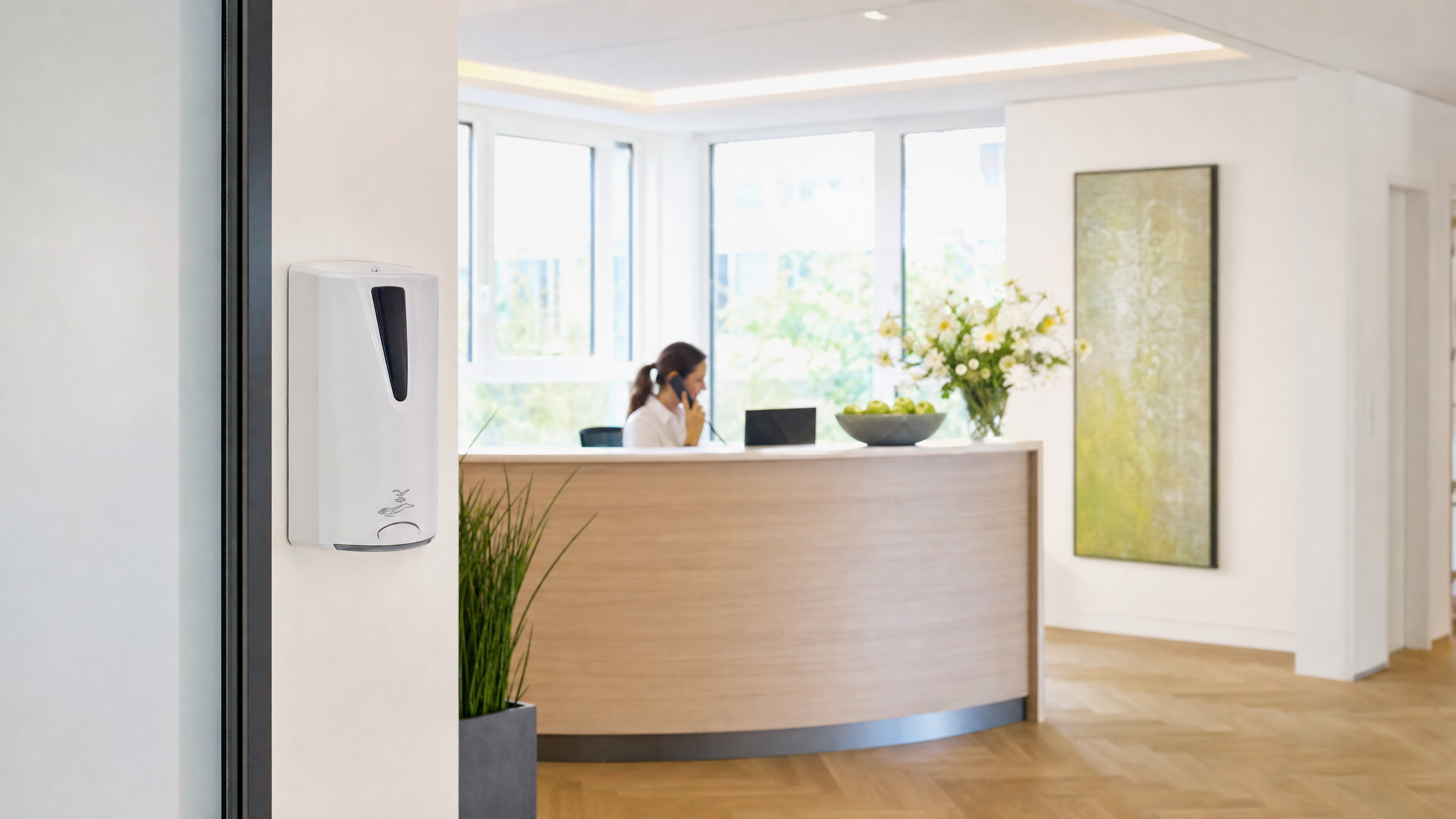
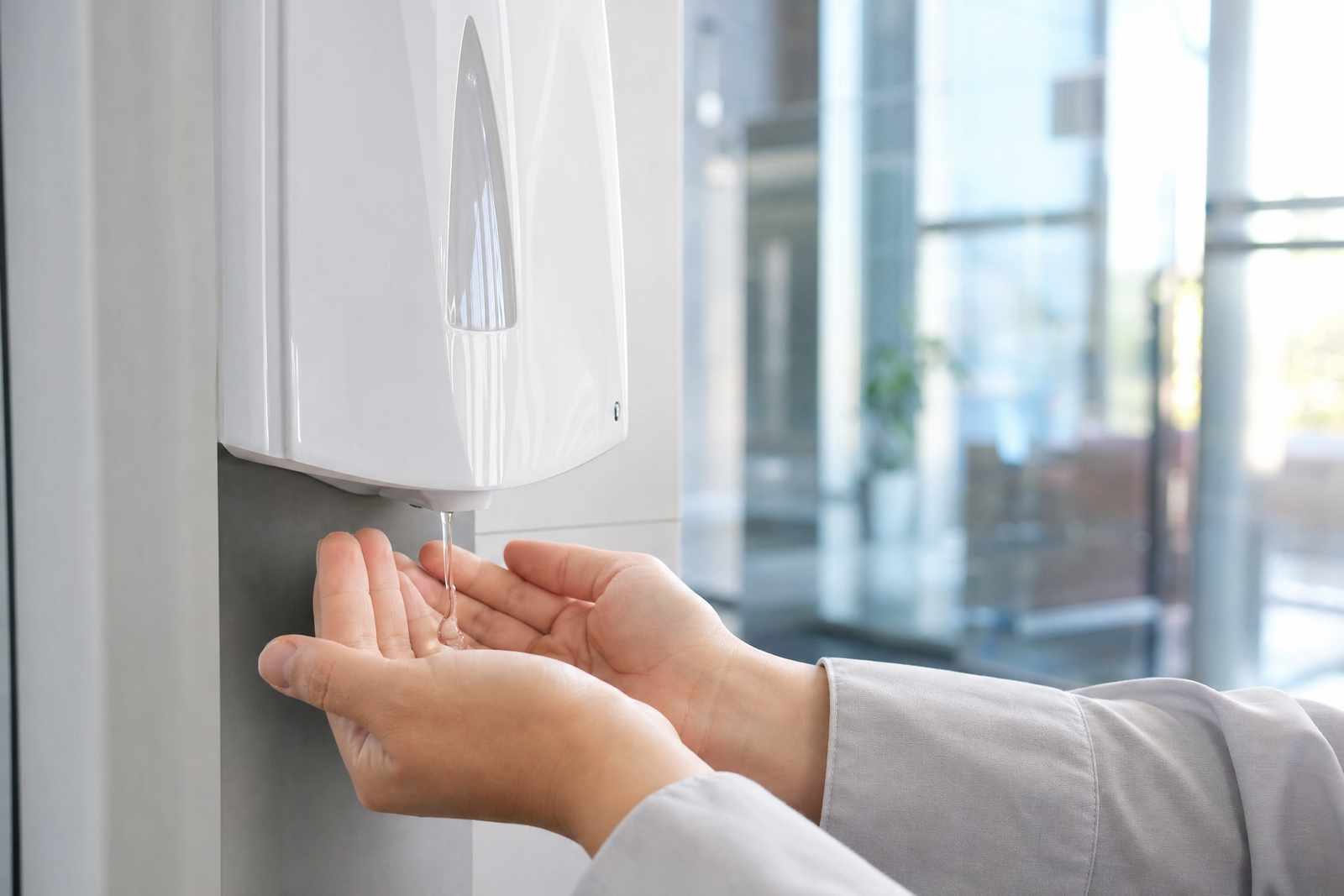
Hygiene only works when it is within reach. A dispenser at the entrance, in the kitchen, at the toilet and in the meeting room noticeably lowers the barrier. Touchless sensor dispensers additionally reduce contact points, especially at peak times. Between refillable and single-use systems: refillable systems are cheaper in use, closed single-use cartridges are more hygienic, because no manual refilling is needed.
For drying hands, paper towels are usually the more hygienic choice at peak times, compared with cloth towels or warm-air dryers, because they absorb moisture and germs directly and are discarded. You will find the suitable units in the category dispensers, and the matching paper under hygiene papers.
Which business needs what
In hospitals and care, the requirements are highest: the right, often virucidal spectrum, documented contact times and robust dispensers such as the elbow-lever models of the ingo-man range. In hospitality and hotels, food-contact surfaces and kitchen hygiene are the focus, and that also includes the care of equipment, for example the coffee machine.
In offices, schools and administration, it is mainly the contact points that count: door handles, light switches, keyboards, together with hand hygiene and enough paper towels. In facility management it is about a reliable rhythm: a clear cleaning and disinfection plan, the right dosage and timely resupply. A thoroughly clean business also includes regular cleaning, for example streak-free windows. Heros Hygiene is the Swiss specialist for cleaning and hygiene, based in Diepoldsau in the Rhine Valley, for businesses and private customers, and helps you choose before you buy a whole range.
Common mistakes and how to avoid them
A few mistakes come up again and again. The most common is wiping dry too early, before the contact time is reached, so the product only works halfway. The second is the wrong spectrum of activity, for example a product that is only limited virucidal when norovirus is suspected. The third is mixing detergent and disinfectant, which weakens the effect and can release fumes. The fourth is disinfecting instead of cleaning, even though dirt shields the germs. And finally, over-disinfecting the hands without skin protection, because chapped skin gives germs a surface to attack.
Frequently asked questions
What is the difference between cleaning and disinfection?
Cleaning removes dirt and a large share of germs mechanically, for example with water and a detergent. Disinfection additionally reduces disease-causing germs to a harmless level in a targeted way, with a tested disinfectant and a defined contact time. In a business you clean first and disinfect afterwards where needed.
How long does a surface disinfectant need to act?
The contact time is stated on the product and the data sheet and varies by product and spectrum of activity. What matters is that the surface stays visibly wet for the whole stated time. If it is wiped dry too early, the effect is not ensured.
What does limited virucidal mean?
Limited virucidal means a product works against enveloped viruses, which include the influenza and the coronaviruses. Against non-enveloped viruses such as noroviruses this is not enough, you need a product declared virucidal. Which spectrum is needed depends on the pathogen you want to protect against.
Washing or disinfecting hands, which is better?
Both have their place. Visibly soiled hands are washed, which removes dirt mechanically. On clean hands, disinfection works faster and more thoroughly against germs and is the better choice when the risk is higher, for example in care and hospitality. Skin protection is important so the skin stays intact.
How often should surfaces be disinfected in a business?
That depends on the surface and the business. Contact points such as handles, counters and keyboards are disinfected more often during the cold season, ideally on a fixed rhythm. In kitchens, in care and wherever there is food or patient contact, stricter rules apply. A simple cleaning plan keeps the rhythm reliably.
Conclusion
Hygiene in the cold season can be planned. Three things matter: clean first and then disinfect, choose the right spectrum of activity and keep to the contact time, and make hand hygiene easy with reachable dispensers and good skin protection. For surfaces, hands and dispensers you will find the right range in the category disinfectants. Our team at the Diepoldsau store is happy to advise you on the products that suit your business and, if needed, put together a tailored hygiene concept for you.