AI-generated illustrative image
Grease in the kitchen, limescale in the washroom, germs on high-touch surfaces: in many businesses, daily hygiene costs time, mop water and cleaning agents. A steam cleaner takes a different approach. It works with nothing but electricity and water and loosens dirt with hot steam instead of chemicals. That is exactly what makes steam cleaning attractive wherever things need to be clean and hygienic quickly, without leaving residues or odours behind.
This article shows where a steam cleaner really pays off in a business. You will learn how hot steam loosens grease and limescale, what matters in the kitchen and washroom, which device suits which job and where the limits of steam hygiene lie. The angle is deliberately practical: for catering, care, offices and caretaking, but just as much for demanding households.
What steam cleaning does for your business
Steam cleaning loosens grease, limescale and dirt with hot water vapour of around 100 degrees instead of chemicals. The steam penetrates surfaces, grout and crevices, softens deposits and takes a large share of the germs with it. You work with electricity and water only; in a business, the method suits hard surfaces in the kitchen and washroom above all.
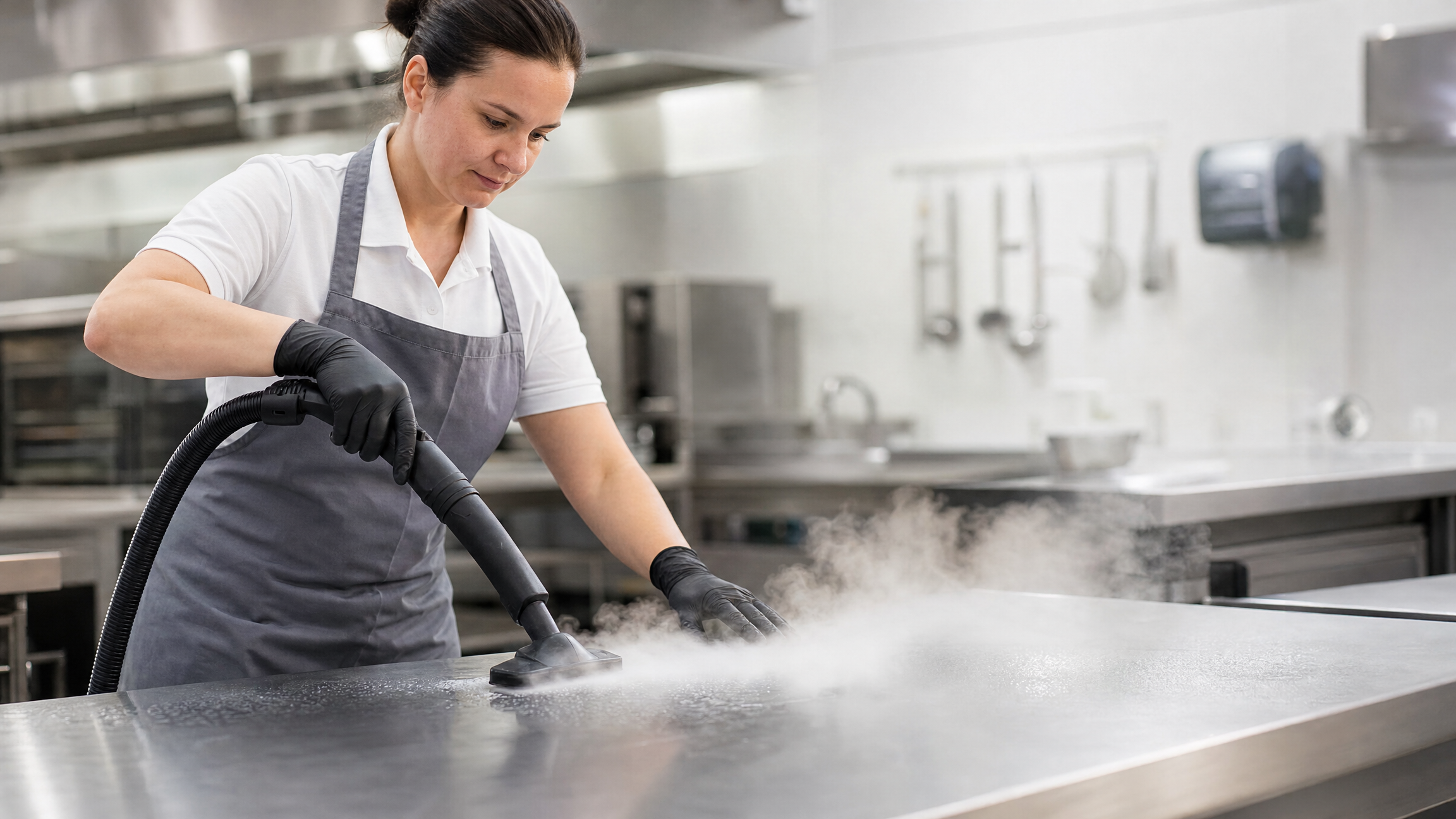
Depending on the device, the steam leaves the nozzle at around 100 degrees and a pressure of a few bar (Kärcher figure). This combination of heat and pressure is the real lever: grease softens, limescale comes loose, and the dirt is wiped away with a cloth or, with a steam vacuum, drawn off directly. Because no cleaning agent is needed, dosing, dwell time and rinsing fall away, as do chemical residues on work surfaces. That is an advantage wherever food is handled, and it saves storage and product costs along the way. It is important to guide the nozzle close to the surface, because the steam cools and works less effectively as the distance increases.
On hygiene, Kärcher states that its steam cleaners remove, when used correctly on smooth hard surfaces, up to 99.99% of common bacteria and up to 99.999% of enveloped viruses, measured under defined conditions (maximum steam level, direct contact, slow movement or around 30 seconds of spot steaming). That makes the steam cleaner a strong tool for chemical-free basic hygiene. It does not, however, replace an approved surface disinfection in every case, more on that below.
Kitchen and catering: loosening grease without chemicals
AI-generated illustrative image
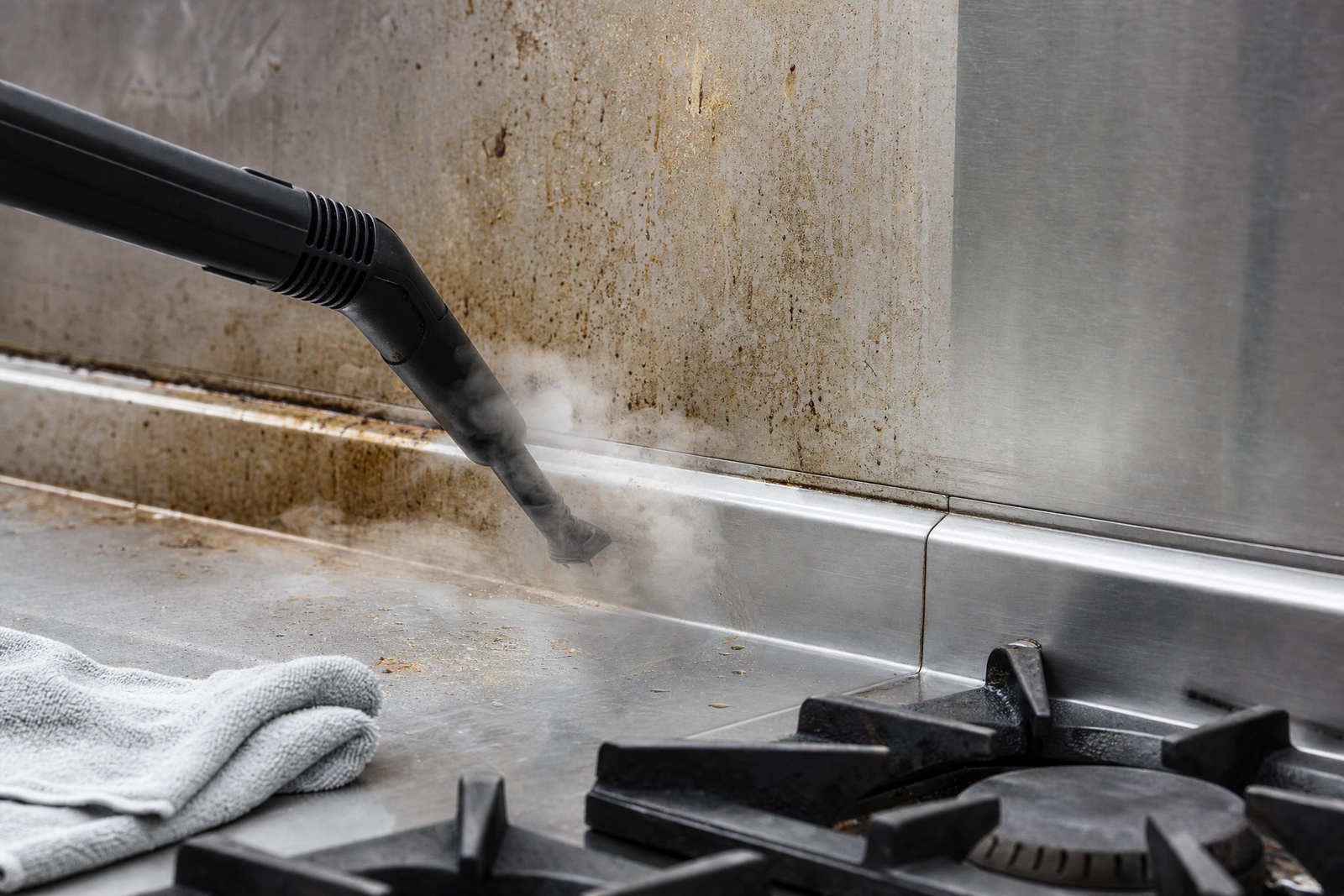
In the kitchen, grease builds up wherever food is cooked and fried: on hobs and extractor hoods, on worktops, on tiles and grout. Hot steam even softens baked-on grease, so it lifts off with little effort and without harsh degreasers. For catering and communal kitchens this is doubly practical: surfaces are quickly ready for use again, and because only water vapour is involved, no product residue is left near food.
Hard-to-reach spots benefit too. Grout, silicone edges, drains, cold-room door seals and the gaps around appliances are reached better by the steam jet than by a cloth. A steam vacuum goes one step further and draws up the loosened dirty water directly, which saves time on larger areas and leaves the floor ready to walk on straight away.
Washrooms: limescale, grout and fittings
AI-generated illustrative image
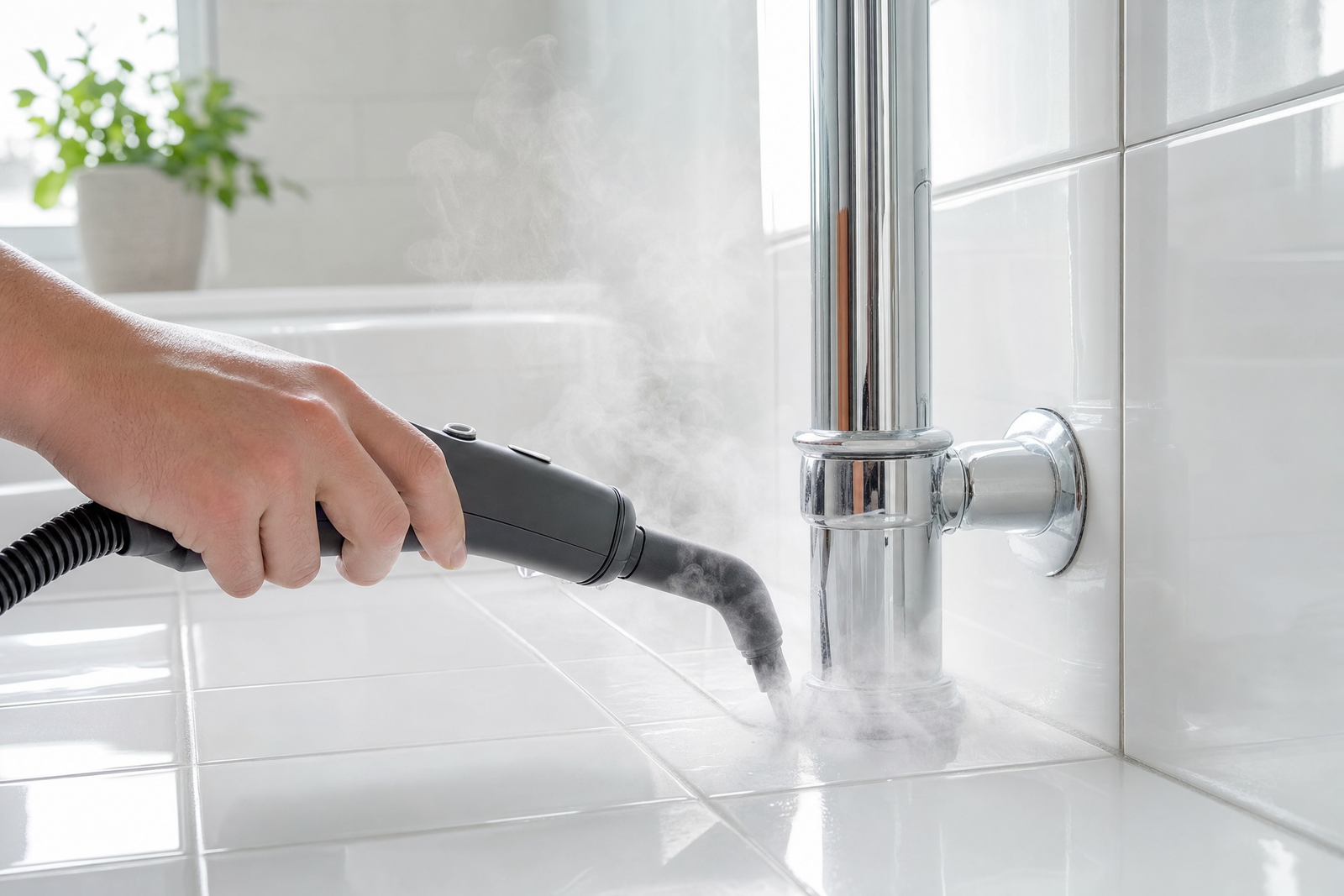
In the washroom, limescale is the constant theme. Steam dissolves deposits on fittings, shower walls and tiles without the need for aggressive descalers. At the same time it reaches the grout, where dirt and germs settle. Toilets, urinals and high-touch surfaces such as handles can be brought back to a thorough, hygienic state with steam, an argument in care, hospitality and publicly accessible facilities.
A note on protecting materials: steam is hot. Sensitive surfaces such as unsealed wood, some plastics, waxed floors or cold glass do not always tolerate the heat well. When in doubt, test the effect on an inconspicuous spot first.
Which device for which job
For getting started and for smaller areas, a compact steam cleaner such as the Kärcher SC 2 EasyFix or the SC 2 Deluxe is a good fit. Anyone regularly working on larger areas is better served with more steam reserve and accessories, for example the SC 3 Deluxe, the SC 4 EasyFix or the SC 5 EasyFix with a short heat-up time and continuous steam. You will find an overview of all models in the Kärcher steam cleaners category.
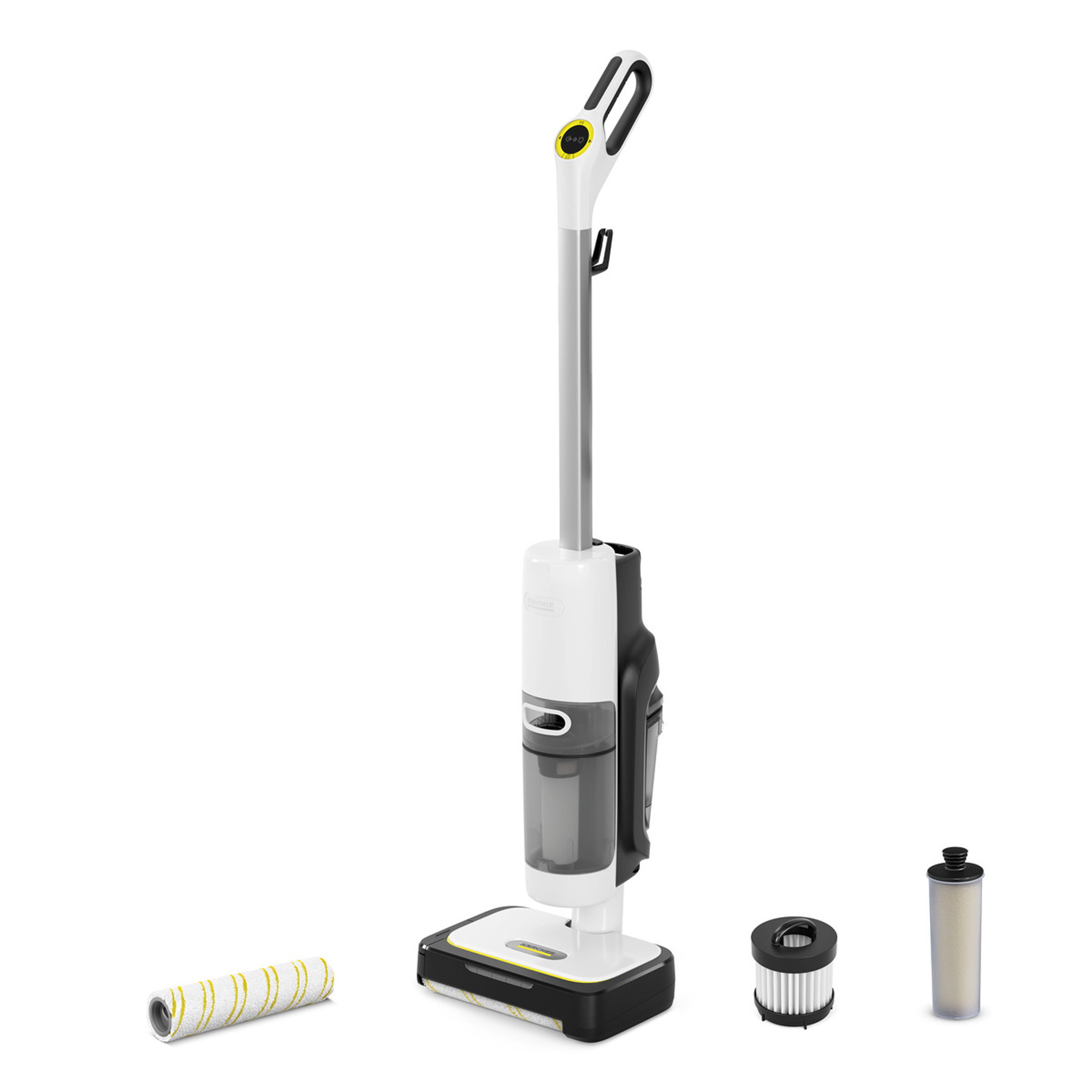
If the loosened dirt should disappear right away, a steam vacuum is the better choice. It combines steam and suction in a single pass, like the Kärcher SV 7 or the SCV 4 Steam Vac, and pays off above all on larger hard-floor and washroom surfaces. You can see the devices in the Kärcher steam vacuums category. For rough outdoor cleaning on terraces, paths and façades, a high-pressure cleaner remains the right tool instead.
Three questions help with the choice: how large are the areas, how often do you clean and how important is a short heat-up time? For continuous use, devices with a larger tank or refill function and continuous steam avoid pauses. Also look out for the right accessories, for example detail, surface and grout nozzles, for the spots you clean most often.
How to clean properly with steam
A few techniques decide the result. Remove coarse dirt dry first, then go over it with steam. Guide the nozzle slowly and close to the surface, twice for heavy soiling, and wipe the loosened dirt away with a clean microfibre cloth, or let the steam vacuum draw it off right away. Work in overlapping passes so no spot is missed.
The right steam level matters: lower for delicate surfaces, the highest for baked-on dirt and hygiene. Change microfibre covers as soon as they are saturated and then wash them at at least 60 degrees. The device itself will thank you if you descale it as the manufacturer specifies and run it with low-limescale water, especially in hard-water regions. That keeps the steam output constant over the years.
Steam does not replace every disinfection
As thoroughly as steam cleans, it is not a cure-all. Where a surface disinfection with a defined spectrum of action and a set dwell time is required, for example with suspected norovirus or in sensitive areas, there is no way around an approved disinfectant. The combination often makes sense: first clean thoroughly with steam, then disinfect in a targeted way where needed. How to disinfect surfaces and hands in your business correctly is covered in the article disinfecting surfaces and hands correctly.
Common mistakes
Five mistakes come up again and again. The first is guiding the nozzle too fast: the steam has no time to work and the surface only gets damp instead of clean. The second is too much distance from the surface, which cools the steam. The third is steam on cold glass or sensitive materials that heat can damage. The fourth is assuming steam replaces disinfection everywhere, which is not true in regulated areas. And the fifth is neglected device care: once scaled up, it loses pressure and steam volume. Keeping these points in mind, you get the best out of a steam cleaner for the long term.
Frequently asked questions
Is a steam cleaner really worth it?
Yes, wherever hard surfaces in the kitchen or washroom need regular cleaning. A steam cleaner loosens grease and limescale without chemicals, cleans grout and hard-to-reach spots thoroughly and saves cleaning agents. For mostly textile floors or rough outdoor cleaning, other devices are more suitable.
What should you not clean with a steam cleaner?
Anything that tolerates heat and moisture poorly: unsealed wood and parquet, sensitive plastics, waxed or oiled surfaces, leather, silk and other delicate textiles, as well as cold glass, which can crack from the temperature shock. When in doubt, test on an inconspicuous spot first.
Is a steam cleaner better than mopping?
For many hard surfaces, yes. Steam loosens grease and limescale with heat, not just with water and a mop, reaches grout and crevices and leaves little residual moisture. Plain mopping stays useful where there is only dust and loose dirt to pick up, or when the surface cannot take heat.
Where does the dirt go during steam cleaning?
The steam softens the dirt, which is then picked up: with a classic steam cleaner using a cloth or microfibre cover, with a steam vacuum directly via the suction function. Used microfibre covers are then best washed at at least 60 degrees.
What is the difference between a steam cleaner and a steam vacuum?
A steam cleaner loosens dirt with steam; it is picked up by hand with a cloth. A steam vacuum also loosens the dirt with steam and draws up the dirty water in the same operation. For small to medium areas a steam cleaner is enough; on larger areas, or when it needs to be especially fast, the steam vacuum shows its strength.
Conclusion
Steam cleaning is strongest in a business wherever hard surfaces in the kitchen and washroom need to become clean without chemicals, quickly and hygienically. Hot steam loosens grease and limescale, reaches grout and reduces germs, with electricity and water alone. For choosing a device: small areas with a compact steam cleaner, larger ones with more steam reserve or a steam vacuum straight away. Which model suits your business you can see in the Kärcher steam cleaners category. As a Swiss specialist partner for hygiene and cleaning, the Heros Hygiene team at the Diepoldsau shop in the Rheintal is happy to advise you and help you find the right device for your surfaces.